Transient Lists, Enduring Books – 22 May 2026
Upon my word, how I love a good argument. And a good list. One causing several of the other is ideal. Pour me a drink and let’s get stuck in.
The Guardian’s ‘100 Best Novels of All Time’ (I think they appreciate the silliness of the title, having published the same one with different content in the past) has caused all sorts of rage and discussion from guessing what will come first*, to arguments about the order of the Austens (P&P>Emma>Persuasion>Mansfield Park, apparently, with S&S and Northanger Abbey failing to make the cut. Of course placing not one, not two, not three, but four times on the list is quite a testament. Woolf beats this with five.), to, inevitably, what is missing.
A list, even of 100 exceptional novels, causes everyone to bemoan what is not there. ‘Où sont les Neigedens d’antan?’ asks Yossarian in Catch-22, which has not been neglected, thank goodness. Où sont les Amis[es], père et fils? some may wonder. Evelyn Waugh? Dodie Smith? Elizabeth Gaskell? J. L. Carr? Lewis Carroll? Seriously? No Alice? Oh, we could do this all day. (And we will.)
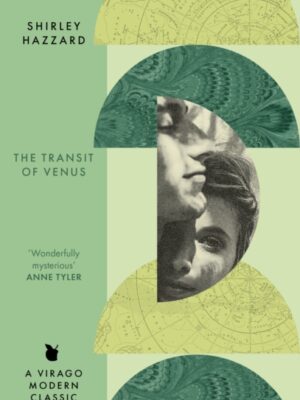
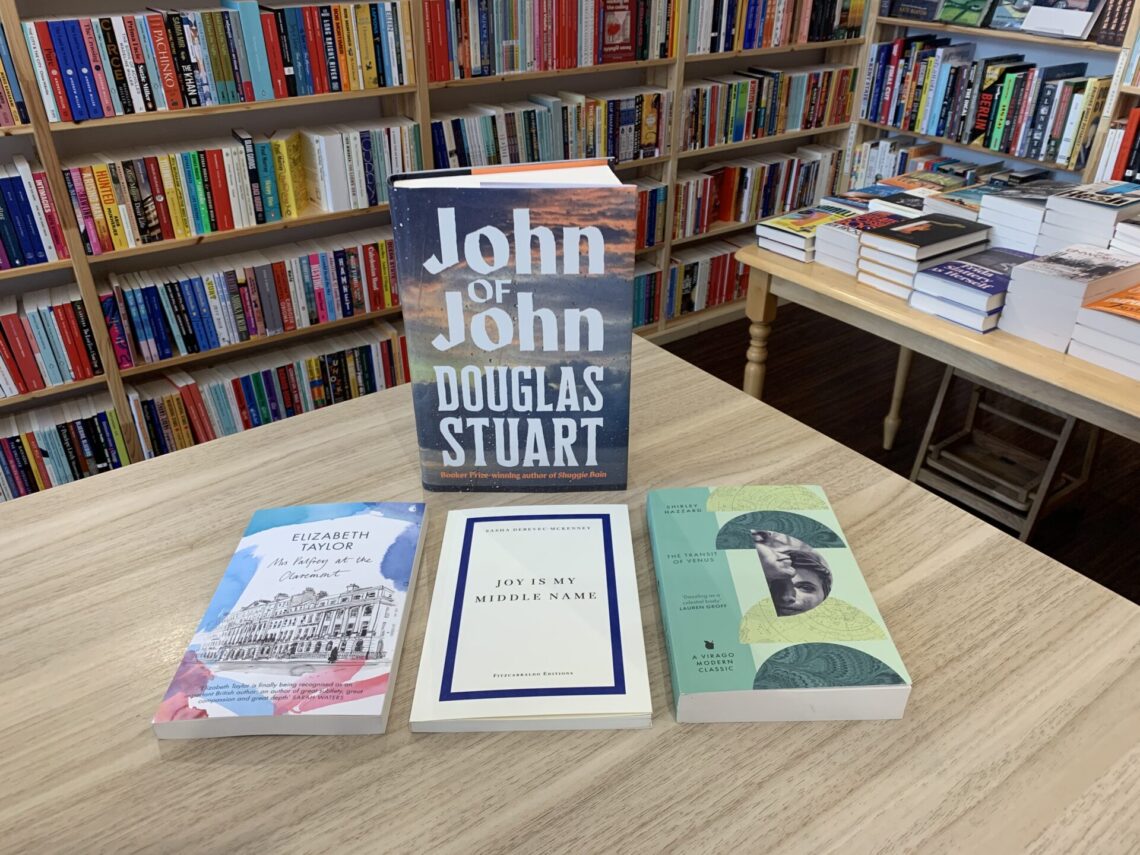
One of the best things about such a list is coming across a title which has been on the shelf for years and knowing that this is the moment to pluck it. No need to feel guilty that you haven’t read it yet just excitement that you get to now. So, to The Transit of Venus by Shirley Hazzard.
I suppose it is a pursuit-of-love story – a young astronomer sent to work with an older one in a grand-ish house in 1950s rural England, where he meets Caroline Bell, of whom one reads, ‘You deferred to her future beauty, taking it on trust.’ She was, ‘as yet unfinished, lacking some revelation that might simply be her own awareness.’
I suppose it is a morality story and a political story, stretching across Europe, Australia and America huge in its scope and in the histories it encompasses. Not to mention its ability to stretch up to the heavens – Venus a figure and a character in more ways than one – and to God.
If I tell you that you will want to read each paragraph several times will that put you off? I hope not. One moment the reader is observing the shape of a character’s neck or a blemish in an eye, the next the sky descends in all its terrible power upon monuments, countryside and Englishness itself. Blink and you miss both.
You know the outcome of the would-be lover, revealed casually at the start, so perhaps this is a tragedy. Except you could say that things turn out right and that this constitutes a happy ending. I may need to read it another 99 times.
Missing from the list of the 100 best books of all time (actually, novels, and novels published in English, translations permitted) – if only logic, outside of Wonderland, allowed for 1000 books to make the cut – is anything by Elizabeth Taylor (not that one).
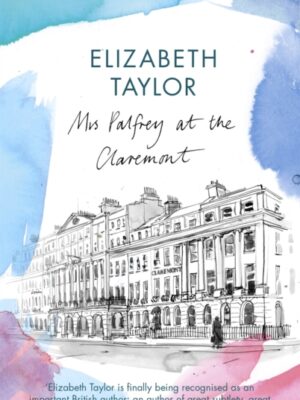
Mrs Palfrey At The Claremont finds the eponymous widow checking into The Claremont Hotel on the Cromwell Road. She joins a group of elderly residents, living, but not permitted to die, in its more unprepossessing rooms. Mrs Burton drinks. Mrs Arbuthnot judges. Mrs Post is used. Mr Osmond longs for the company of men.
Mrs Palfrey has a grandson, Desmond, who works at the British museum and fails to visit her and an acquaintance, Ludo, who will alleviate her shame by pretending to be him. Ludo works at Harrods – not for Harrods, but in its Banking Hall, where he can pursue his dreams of becoming a writer, without paying for heating. It is a marvellous novel about manners, dignity and the terrible food served in 1960s hotels.
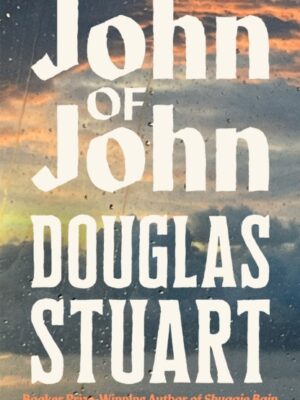
When a new list emerges in ten, twenty or thirty years, will John of John by Douglas Stuart, published yesterday, feature? I think it’s stunning. It will be on many a book of the year list.
Cal (John-Calum) is summoned home to Harris by his father, John, a crofter and weaver, to help with the care of his grandmother and the land. Not that Cal was making a great success of things on the mainland, where he was broke and hungry. There is much the two men cannot say to one another: John is terse and violent; Cal is sullen and lost. The harsh judgement of a Presbyterian God and His unforgiving followers in a claustrophobic community threatens all.
Yet there is a scene where, their hands blistered and sore from the hours spent at the loom, father and son sit across the table and care for one another. They work threads of wool out from scabbed skin, tend to calluses, smooth oil into deep cracks. There is a promise of understanding, even love. The landscape in all its harsh beauty, its colours compared with the threads they shape, the attention to detail – particularly Cal’s grandmother’s feet, her posture, her movement – and the language, shifting from Gallic to English and showing what remains unsaid in either are remarkable.
If you long for poetry in all these centuries of prose, I offer Joy Is My Middle Name by Sasha Debevec-McKenney. I wrote of this last year, noting a poem about the film Babe (no Dick King-Smith on the list either?) and was prompted to read it again by its winning the Dylan Thomas Prize last week. It is a witty and intelligent collection, as thoughtful on sheep-herding pigs as it is on the death penalty, forthright about addiction, body-image and Lyndon B Johnson and illustrating the chaos of life in its most controlled punchlines.
May your weekend be one of the best, top 100 at least,
Lizzie
*Got it in one. Quite right too.
Featured in the newsletter
-

John of John
£20.00 -
The Transit of Venus
£10.99 -
Mrs Palfrey At The Claremont
£10.99 -
Joy Is My Middle Name
£12.99