Through a Stein Darkly – 17 April 2026
On returning to Finsbury Park from postings with the RAF in Egypt, Kenya and Cyprus, a young man, short of cash, pawned his Rolleicord camera for £5. He had bought it with his life savings in Aden, Yemen, ‘one of those twin reflex cameras that you hold up to your chest and look down into’ with no knowledge of such a camera being used by the great photographers Bill Brandt and Brassaï.
‘What happened to that lovely camera?’ his mother asked. She immediately bought it back for him. Thus was Don McCullin armed when he came across his old acquaintances, The Guvnors, still hanging round in greasy-spoons, still strutting at dance-halls and fighting in the streets off the Seven Sisters Road, still swaggering in Teddy Boy suits and up for having their picture taken. Following a fight and a murder, he sold a photograph of them to the Observer and his career began.
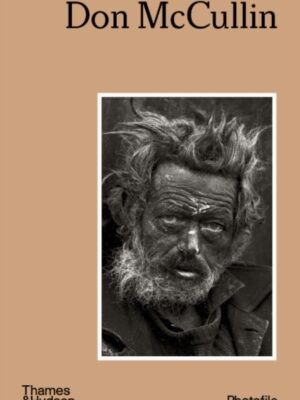
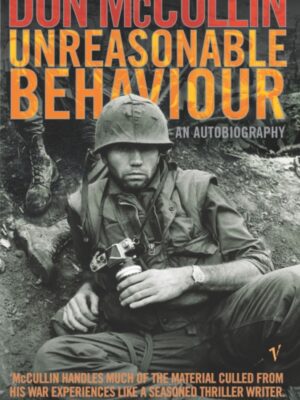
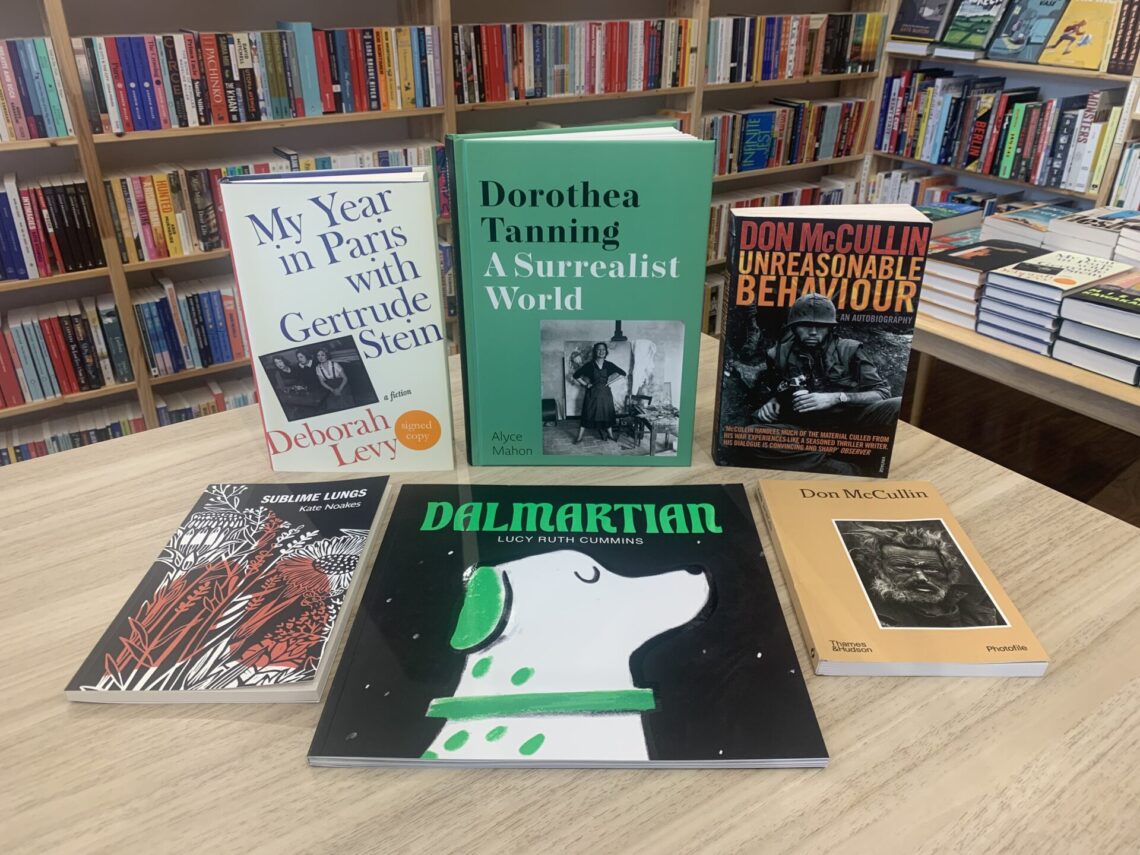
You can see the disarming scene in the Thames & Hudson Don McCullin Photofile, read its story in McCullin’s autobiography Unreasonable Behaviour and visit it at The Holburne in Bath.
I went to the exhibition a few days ago and have been able to think of little else since. It ranges from that early photograph to ones taken in Vietnam, Northern Ireland, Cyprus, Biafra and Beirut. Next to people living and dying through wars, there are landscapes and ruins. There are photographs which feel three-dimensional: still lives, created by McCullin as if in search of order and peace, and classical sculptures, their beauty damaged but surviving war-torn centuries.
There is a photograph showing so starkly what cruelty and suffering humans can inflict that it is almost impossible to take in. There is a photograph of such brutality, a celebratory breaking into song beside a murdered girl, that it is hard to breathe. There is a photograph of men interrupting work to play football on the beach at Scarborough – is it joyful, though fleeting? – and there is a hypnotising sky over the Somerset levels, a scene without bodies though they haunt photographer and viewer from beyond the frame.
Unreasonable Behaviour is an exceptional book about the work which has driven McCullin across the world, documenting the human capacity for suffering and for inflicting suffering everywhere. He struggles with his own role, with what he is taking from his subjects. There are moments uncaptured, when he refused to hold up his camera. There are things untold, the injured and dying that others have said he helped. He is shot at, wounded, threatened and imprisoned, all so that we can look away from him and into the eyes of others.
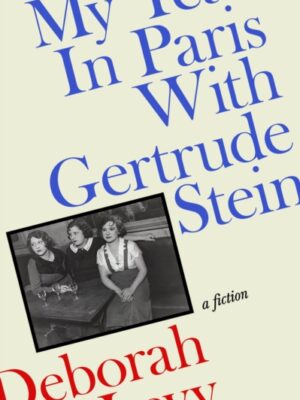
After the exhibition, I sat down to read the new Deborah Levy, My Year in Paris with Gertrude Stein: a fiction and found myself still at war. In 1945, Gertrude Stein publishes Wars I Have Seen, having witnessed the Spanish-American war and two world wars. Around her artists dismantle realism and create something new and out of step with its time. In 2024, a woman visits Gertrude Stein’s grave and writes about the author, art collector, legend, godmother of literary modernism, gourmand and self-proclaimed genius. Around her people scroll through wars on their phones.
Whilst searching for Stein in her work and in the hundred and ten acres of the Père Lachaise cemetery, Levy’s character (is it Levy herself? She reminds us that Stein wrote, ‘You are of course never yourself.’) has made two friends: Eva, into whose eyes no one can look without saying Awww, and Fanny, who has three lovers, works constantly and still has time to serve Raclette with all proper ceremony.
Steeped in Stein’s baffling sentence structure, commas and question marks having departed to smoke outside, the narrator is liable to lose it. What is it? she asks throughout. It is daring. It is conformity. It is coherence. It is all the isms through which Stein lives, colonialism, fascism, communism, cubism, surrealism, modernism and more. It is the name of Eva’s lost cat, a fact confusing to everyone but its owner. While losing it, perhaps she is finding out about composition, how Stein was put together, how to put herself together, how new forms begin, how literature can express a meaning hiding in plain sight and art show something not previously visible.
The aims are huge, the writing deceptively simple. The three friends know nothing of each other’s histories; they are unrooted and present, so that it is easy to meet and connect with them immediately even as they discuss a writer who thought no conversation worth having if it were wholly understandable.
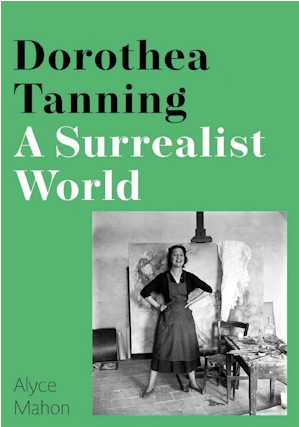
As with all Levy’s books I love climbing in and do not want to emerge. I will do so though, with Stein’s approval, for Dorothea Tanning. Though one may not quite have Stein’s extensive collection of surrealist art, one can enjoy such things through Alyce Mahon’s new book on Dorothea Tanning, a biography of the artist, an exploration of her philosophy and her impact and a book which, like McCullin, Stein and Levy, illuminates things unseen. The reproductions of Tanning’s work are beautifully done but the photographs of her feel particularly special – for all her significance and big ideas, there she is, grinning at the camera.
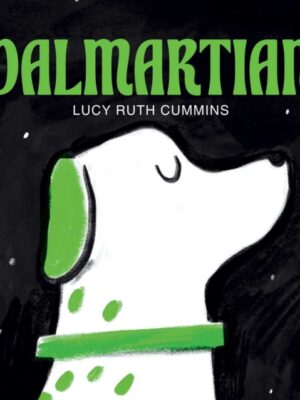
I think it safe to assume that surrealists, dadaists and cubists would all grin at Dalmartian by Lucy Ruth Cummins. You might think that the main character in this picture book looks like a familiar kind of dog but this is an unearthly visitor, on a research trip to our planet and accidentally left behind when the others return home. I guess the spaceship was on a tight schedule. A kind young gentleman offers to host this new being, but their expectations of reasonable behaviour will need a little exploration…
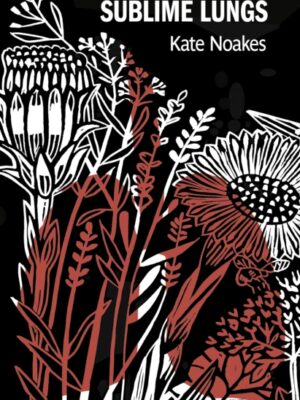
Questions of composition, of how to respond to this moment, of what art and literature can do will all be answered in the shop on Tuesday when we are delighted to host Kate Noakes for the launch of her latest book of poetry. We will celebrate Sublime Lungs, Kate’s ninth poetry collection, enjoy a drink together and hear poems both moving and mystical about asthma, air pollution, stone circles and Katherine Mansfield.
May your weekend be sublime,
Lizzie
Featured in the newsletter
-

Don McCullin
£12.99 -

Dorothea Tanning: A Surrealist World
£30.00 -
My Year in Paris with Gertrude Stein
£18.99 -
Dalmartian
£9.99 -
Unreasonable Behaviour
£12.99 -
Sublime Lungs
£12.99