Do Look Now – 10 April 2026
The world has gone crooked and turned upside down. Perhaps so many times in history and in my lifetime that one wonders: how do we recognise the right way up? How does love endure? How does family?
At the beginning of Crooked Cross, devoted brother and sister, Helmy and Lexa, decorate the Christmas tree with candles and an angel, itself a little crooked from years of use. Their young cousins are held back from bursting through the door by Lexa’s fiancé, Moritz. Finally, they are allowed in. There are songs and games. The families hold each other and laugh in the peaceful glow. Lexa’s brother Erich returns unexpectedly to complete the circle, climbing through the window to everyone’s delight.
This is Munich at the turn of 1932 and, amongst sheet music and tinsel and toys, on the piano is a picture of Hitler.
By the new year, Moritz, who has a Jewish surname, will have lost his job. By March, the Nazis will have been voted into power. By April, most join in a boycott of shops run by Jews.
How do we recognise what we are living through? How do we stand up against it? Even against our own family? Even if doing so risks their lives, yours too?
I say ‘we’ because the author frequently turns to the reader switching to the second person, so that you become Lexa, dancing with a man who has become an object of hatred, you hear the songs change to rouse enmity in the name of liberation, you watch spring come to the mountains and lakes of Bavaria and wonder how anyone could live anywhere else.
Crooked Cross was re-published last year by Persephone Books but first came out in 1934. Sally Carson did not need hindsight. She saw and wrote keenly. This novel was remarkable then and is painfully prescient now, its questions of courage and complicity still needing to be asked and answered. Carson augurs what we know is coming. You know what that crooked cross of the title will represent.
It is important that this is also a book full of love, in many ways a pleasure to read because the writing is so very good, from the dialogue to the landscape to the quiet scenes at home, even as the beat of boots disrupts, which of course means that it gets under your skin. I urge you to read it. (And encourage, as always, a visit to Persephone Books in Bath.)
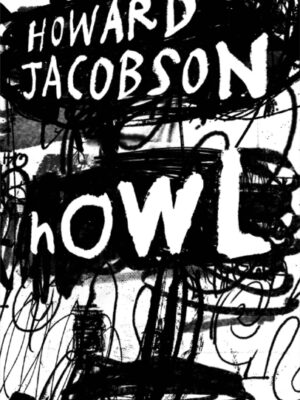
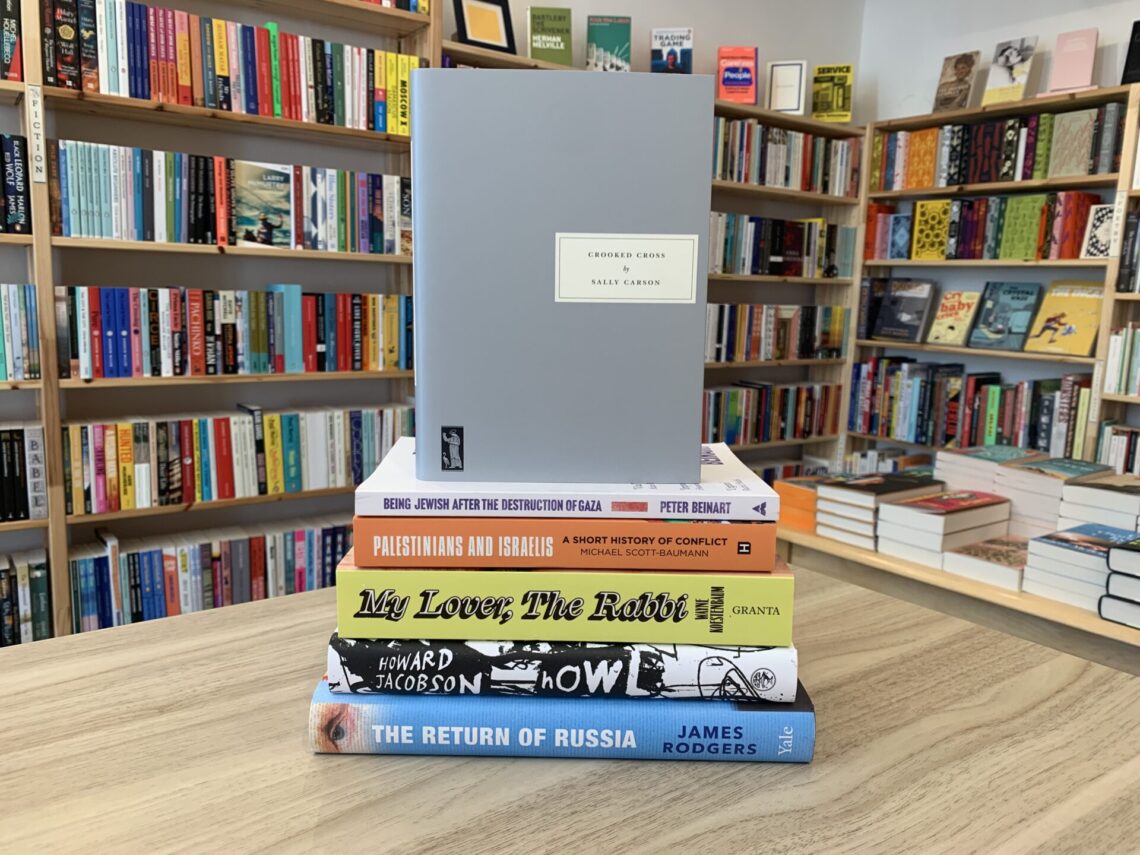
Howard Jacobson’s Howl (or hOWL, to replicate the cover) proclaims itself the ‘story of how the world lost its mind,’ as does Ferdinand Draxler, the Jewish headmaster of a primary school in Streatham and son of a Holocaust survivor, in a world turned upside down. The story begins the day before the day after. That is, it begins on 6 October 2023.
What follows is enraging, confronting and very funny. While the punchlines hit hard and relentlessly, they work because the book is more nuanced than a howl, if as loud.
Everyone has an argument; Draxler the committed educator believes that, if one can get the grammar right, order will be restored. He is convinced of his rectitude, in the staff room, the playground, the National Gallery… His daughter is convinced of hers – she shouts in her father’s face on meeting him when she is on a march and he is leaving Fortnum’s with a box of dark chocolate violet and rose creams; she is broadcast on television ripping down a poster of an Israeli hostage. The characters take up their positions and hold them but the story does more and, one hopes, will allow its readers to do more than shout at one another.
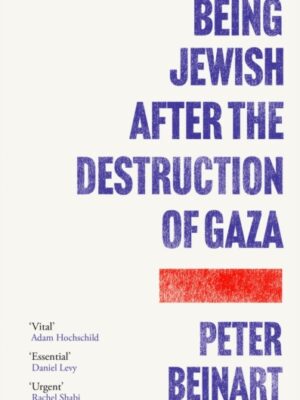
Facing the meltdown of Jacobson’s character and his chocolates, I have turned to Being Jewish After the Destruction of Gaza by Peter Beinart. I do not pretend that I am capable of writing something of import in a newsletter on a subject which fills, rightly, libraries worth of books. It seems to me that this is one which should be plucked readily from the shelf and read with care.
Beinart has changed his mind on much. He takes the reader with him on why and is particular as well as provocative but not unnecessarily. The book is dedicated to his grandmother, who disagreed with what follows and whose presence imbues every page. He asks that, in reading his words, we walk with him, ‘beyond established boundaries. But wherever we part, I hope the rupture is not final.’
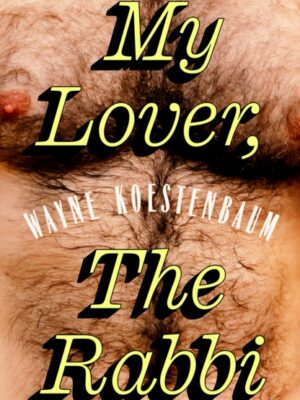
To a very different kind of family and several very different kinds of love and its expression, I am currently delighting in My Lover, the Rabbi by Wayne Koestenbaum. The glossy cover of a man’s hirsute chest, nipples shining behind the glorious title signals what you are in for. (Suffice to say that this isn’t one to read anywhere near your mother. At least, not near mine.)
The writing takes off at a gallop and rarely slows to a canter. Within this story about obsessive desire and romantic norms, expectations and their complete abandonment, there is a very human, rather beautiful and dark one, yet with light (or is that sweat?) glistening between the bristling hairs.
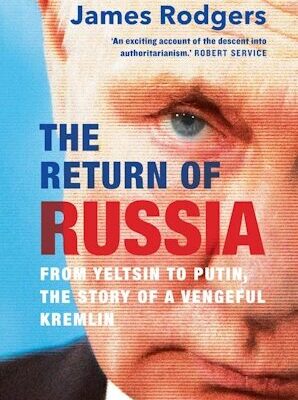
Perhaps this last will not be a topic of conversation but many other matters raised by the books above will be at a salon with the philosopher Julian Baggini on 4 June at St George’s. This promises to be a fascinating discussion with authors James Rodgers and Michael Scott-Baumann on ‘History as a Weapon,’ examining how historical narratives shape foreign policy and can lead to war.
I’ll be there with copies of their books, The Return of Russia: From Yeltsin to Putin, the Story of a Vengeful Kremlin and Palestinians and Israelis: A Short History of Conflict respectively.
We have lots of other events coming up at all of which I look forward to deep discussion, grammar used with due attention and listened to with the same and, I have to hope, a sense of how to tilt the world the right way.
May your weekend take you for a walk with someone you love and disagree with, prepositions notwithstanding,
Lizzie
Featured in the newsletter
-

My Lover, the Rabbi
£14.99 -
Being Jewish After the Destruction of Gaza
£10.99 -
Palestinians and Israelis
£14.99 -
Howl
£20.00 -
Crooked Cross
£17.00 -

The Return of Russia
£20.00