Herons Enraptured – 29 March 2025
I don’t think I’m revealing much by beginning this newsletter with an announcement that I love books.
I love books. I love lists. I love lists of books. I love books of lists. I love lychee flavoured mentos.*
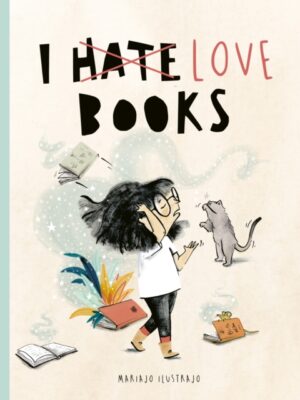
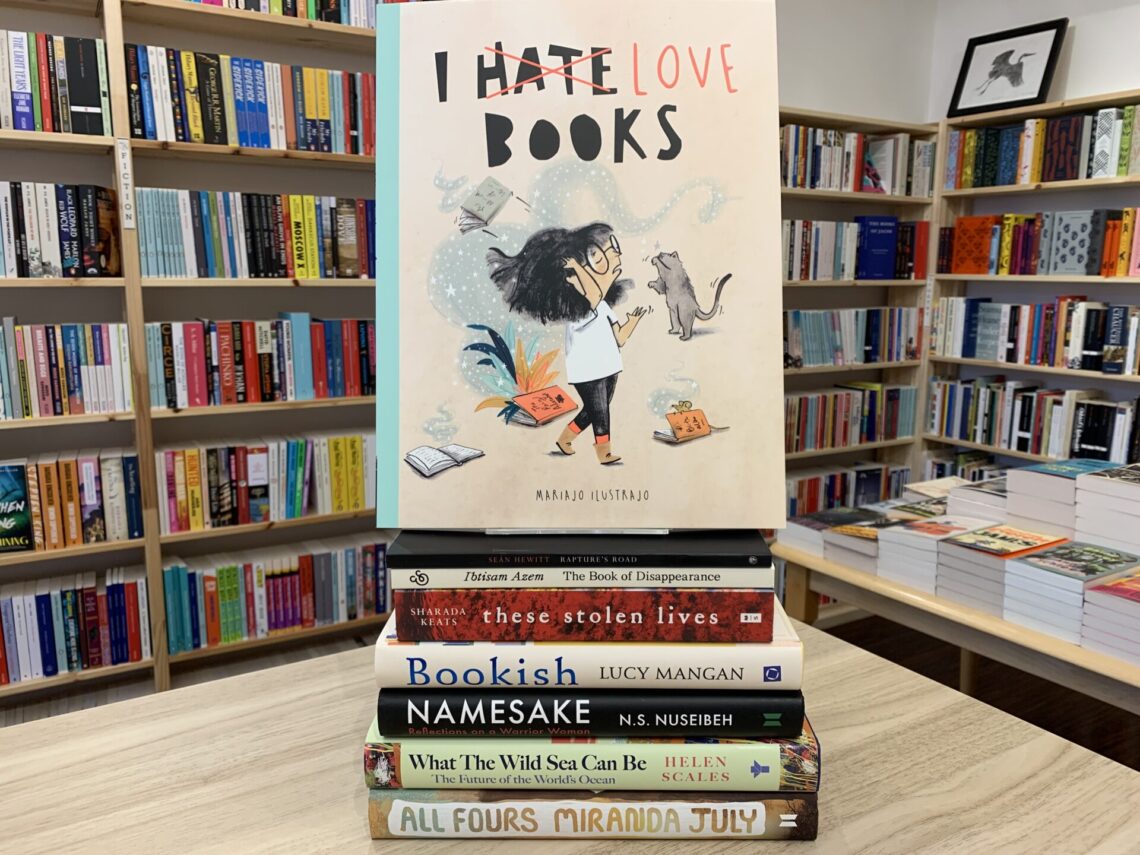
Thanks to Mariajo Ilustrajo, I’m declaring this on an even more regular basis as I skip about the shop with copies of I Love Books, a picture book about a little girl who HATES books. When she is set the task of reading a whole book during the school holiday, she is distraught. But… perhaps the right book might entice her to explore new worlds, meet enchanted frogs, venture to a piranha swamp and have tea with a witch. Perhaps she will discover that she does in fact LOVE books.
Author and illustrator, Mariajo Ilustrajo (seriously, Ilustrajo…) uses colour beautifully and fills each page with little details so that you will want to read it over and over again. Her new book, out next week, Oh, Carrots is similarly witty and features three more things I love: carrots, rabbits and tea.
I Love Books has been nominated for the 2025 Carnegie Medal. Prize lists are coming out more quickly than I can make it through a packet of mentos and so I offer one choice from each of those currently filling my mind and my staircase. This is with no suggestion that I think I can pick a winner. I have placed a bet once in my life and it did not go well for me. Nor for Fulham Football Club.
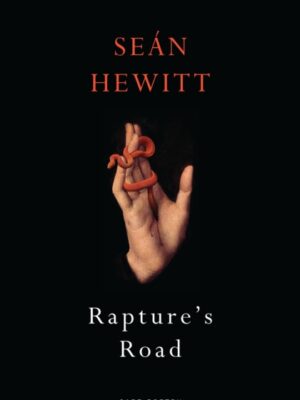
Shortlisted for the Dylan Thomas Prize, Rapture’s Road by Sean Hewitt is a poetry collection which takes the reader on night walks through woodlands, gardens, car parks and dreams. There are ghost moths and there are ghosts. Many of the poems are songlike and lithe as the feathers on which they focus, so that the harsh moments penetrate all the more sharply.
While Ilustrajo found her calling in illustration, marine biologist Helen Scales heard hers emanate from the deep sea. In What the Wild Sea Can Be, shortlisted for the Women’s Prize for Non-fiction, Scales’ fascination with the ocean and love of new discoveries are irresistible – seen through her writing, it’s impossible not to be excited by the detection of an unknown seagrass meadow or a new understanding of the sleep patterns of elephant seals.
Alongside this zeal, Scales is realistic about the urgency with which we need to take action to prevent further damage to the ocean and to allow life to recover. She is practical, balances optimism with realism and will make you more excited about kelp than you may have expected.
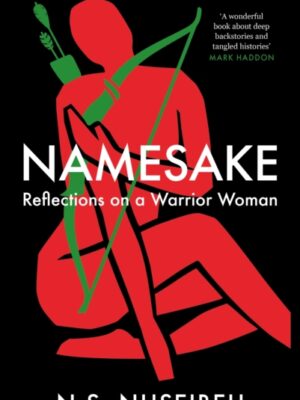
Namesake by N.S. Nuseibeh, longlisted for the Jhalak Prose Prize, follows the fate of Nusayba bint Ka’ab, one of the first women to convert to Islam, a companion of the Prophet Muhammad’s and a warrior who lost an arm when defending him in battle.
Nuseibeh shares not only her name but also her ancestry with Nusayba, if, that is, the latter ever existed. By choosing a semi-folkloric focus for her essay collection and examining the ways in which their lives connect over the centuries, the author imagined at first that her subject would not be overtly political. But questions of bravery, community and being a non-religious Muslim woman inevitably became so even whilst arguing how ‘interconnected all of our concerns are, across time, across space. How close the Arabia of the seventh century is to the London of the twenty-first’ when it comes to consideration of boundaries, anxiety, food and disordered eating, motherhood, language and more.
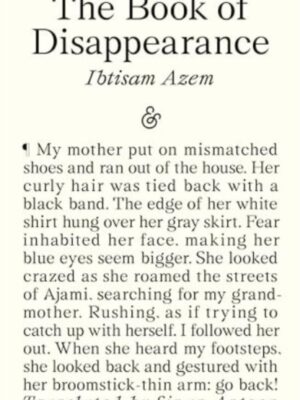
Pairing well with Namesake and longlisted for the International Booker Prize is the remarkable The Book of Disappearance by Ibtisam Azem, translated by Sinan Antoon. One morning the world wakes up to find that all the Palestinians in Gaza and the West Bank have disappeared. At first newsreaders announce that all Arabs are on strike. But it quickly becomes clear that they are nowhere to be found, not to mention that even those held in secret prisons have vanished. How this has happened is not so much the question but how those still able to live respond.
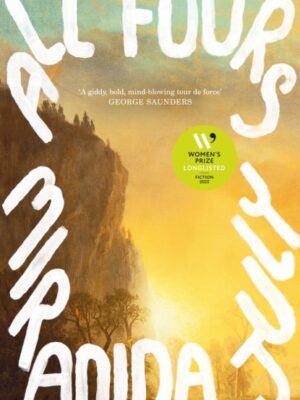
This and All Fours by Miranda July are vying for Best Novel I’ve Read Recently (a list examined several times per week). Longlisted for the Women’s Prize for Fiction, All Fours and its main character are tempestuous, reckless, indomitable… A woman plans a road trip across America, makes it thirty minutes from her home, books into a cheap motel and redecorates her room to resemble one in which she once stayed in Paris. Come to it with no further knowledge of its subject and style – it is so very, very good.
Nominated for the Jhalak Children’s and Young Adult Prize, These Stolen Lives by Sharada Keats is set in a world in which life is golden. It is so important that you have to pay for it. Since the Skøl invaded, survivors are charged for the right to live and must repay the debt of the years they lived freely before the invasion. Mora is doing her best simply to endure. But when she hears that her friend Zako is facing the death penalty she realises that she must rescue him.
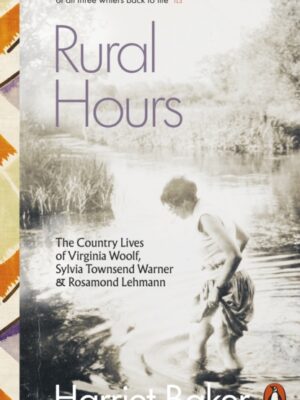
Tomorrow, we are so delighted to host winner of the Charlotte Aitken Young Writer of the Year Award, Harriet Baker, in celebration of the paperback publication of Rural Hours. Please join us from 15.30 for cocktails, book signing and a reading from Harriet. That is 15.30, British Summer Time. These rural hours…
May your weekend and your staircase be full of books,
Lizzie
*Just in case you were looking for a big reveal. Serving suggestion: whilst reading a book with really good lists.
Featured in the newsletter
-

I Love Books
£7.99 -
Rapture’s Road
£13.00 -
What the Wild Sea Can Be : The Future of the World’s Ocean
£18.99 -
Namesake: Reflections on A Warrior Woman
£16.99 -
The Book of Disappearance
£14.99 -
All Fours
£20.00 -
Rural Hours
£10.99