On the Rocks – 20 June 2025
Independent Bookshop Week is flying by far too rapidly, fortunately leaving us with a mountain of books which will stand the test of time.
Our partnership with Foundry Editions has taken us from Paris to Nicosia to Palestine, from Benidorm to the Villa Borghese and into the dark underbelly of Heron Books, that Narnia of the lower ground floor where we gathered on Wednesday to hear from Chiara Valerio, author of The Little I Knew, a brilliant depiction of a small community in which everyone knows each other’s behaviour and routines though not their motivations.
We were joined also by Ailsa Wood, who translated The Little I Knew, and Richard Village, founder of Foundry Editions. It was a treat to hear more about the setting in both time and place, the authors who and the mathematics which have inspired Valerio and about the work of translation.
One of my favourites of Foundry’s books is Far by Rosa Ribas, translated by Charlotte Coombe. This novel too considers community, class, fitting in and ‘normal’ life. The residents of an unfinished housing development aim for the perfect suburban existence that they were promised in moving here, keeping gardens and appearances maintained though their streets lead nowhere and metal fences block off windowless apartment blocks never to be completed.
A woman suffers the tedium of the Residents’ Association and finds herself organising events she has no wish to attend, watched and judged by all and only quietly amused by a pebble out of place, a cigarette butt sullying the ground. Until, that is, she recognises the need to rebel against the constraints of this false society.
A man arrives, on the run, and finds shelter in one of the buildings on the wrong side of the barrier. There are many others there, living silently in the shadows. He picks up a stone with a strange blue marking, slips it in his pocket and hopes the talisman will keep him invisible too.
The story and its recurring stones explore existence at the fringes, permanence, building something new and maintaining illusions.
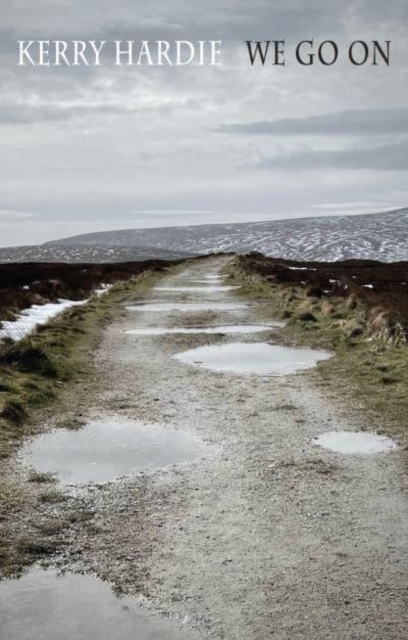
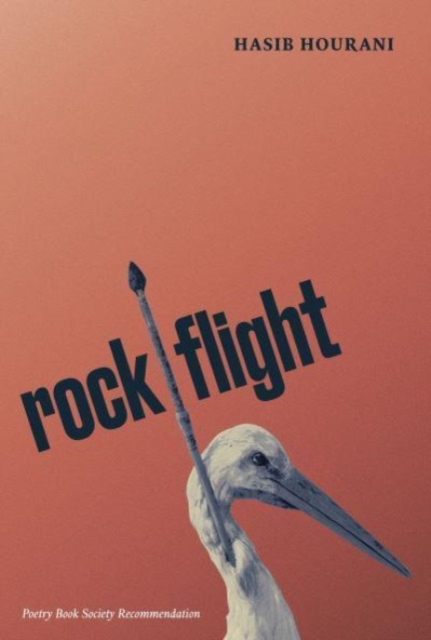
I had all this in mind as I read two poetry collections this week, We Go On by Kerrie Hardie and Rock Flight by Hasib Hourani.
We Go On zooms in on landscapes as they change over time and zooms out to see how those changes repeat. How do we fit in with the lifespan of rocks and rivers, her poems ask, and how do we muddle on though we cannot stop looking back?
Rock Flight is a book-length poem which will make you dizzy as though you are the rock which the poet asks you to hurl, as though you have been hit by the rock which the poet portrays, as though you have been thrown into the air and buried beneath the rubble by the missiles taking flight. The setting is Palestine though the words reach beyond the borders of their pages and geography. Somehow they are ironic and lively too, even – or especially – down to the placement, or not, of a full stop.
And I had all this in mind as I went to see The Ballad of Wallis Island and, between laughing obnoxiously loudly and thoroughly enjoying the music, was touched by the cairns which a character has built on the beguiling, pebbled beach. You see the moment at which a teetering pile becomes sturdy with the placement of the top stone and feel a love story coursing through the monument.
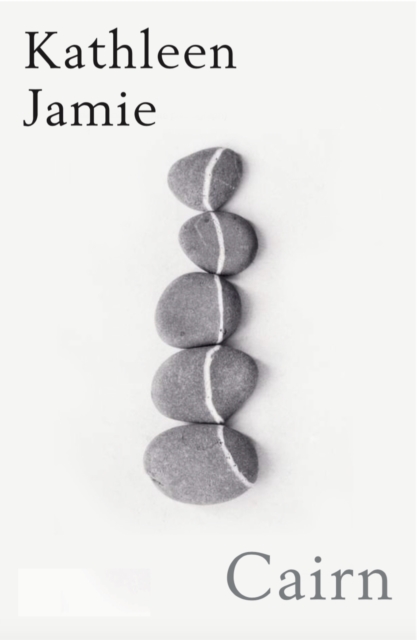
I thought of Kathleen Jamie’s essays and poems in Cairn, compiled to form a cairn themselves. I wrote about it last year and have loved being drawn back to it. ‘Let me leave Cairn here as a trail marker,’ she writes, ‘a view from the strange here-and-now,’ and we stand up with her to walk to the future. ‘Let me give you this quartz pebble,’ she writes and we accept until we understand where it has come from and why we cannot possess it.
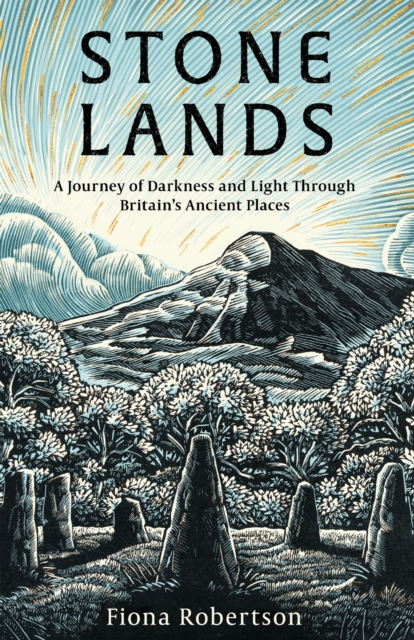
In Stone Lands, Fiona Robertson travels to megalithic sites, from Avebury to the Isle of Mull to Dartmoor to the Isles of Scilly, her journey charting both her love of ancient standing stones and her love for her partner, her companion in these explorations now critically ill. Robertson’s descriptions brought to life for me the allure of these locations, thrumming with an untouchable magic, and her explanations of the theories about the different sites capture the fascinating and the weird.
The perfect accompaniment to this – and one which fits in a pocket so that you can take it with you as you caper about a stone circle (is capering the appropriate behaviour?) – is Ancient Britain for Modern Folk by Tom Howells, a beautiful guide to ‘more than just old stones.’ Do you know your menhirs from your trilithons and your fogous from your cromlechs? I did not.
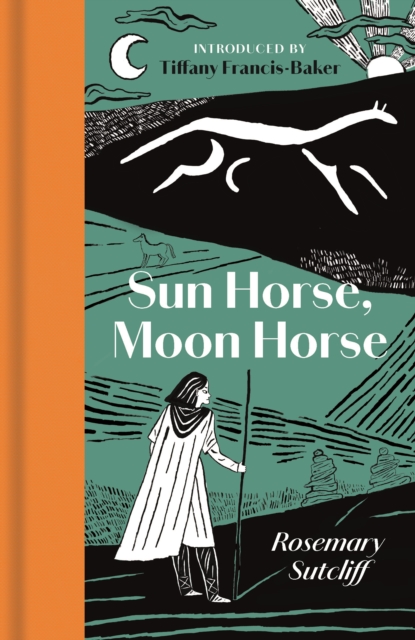
The magisterial and enchanting sites covered extend also to chalk figures including the White Horse of Uffington, the subject of Rosemary Sutcliff’s children’s book, Sun Horse, Moon Horse. Manderley Press (another independent publisher I adore) have just released a stunning edition of this story about a strange boy, an outsider within his own tribe who becomes their advocate when the tribe is conquered. It is he who carves the image of a horse on a hillside, a massive undertaking to set his people free.
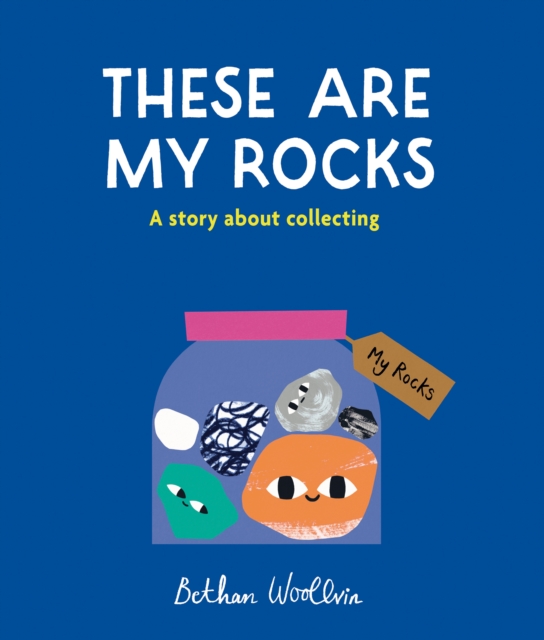
If you are in any doubt about the history and possibility held in a rock (or if you know a young child who loves collecting things – pebbles, spiders, things in jars, things that wobble) then These Are My Rocks by Bethan Woollvin is a must-read: a fellow connoisseur, an antiquarian, a gatherer of all things odd and sometimes prickly introduces their beloved collections. (Possibly check under your child’s bed for rotting fruit, in case this book gives them any ideas.)
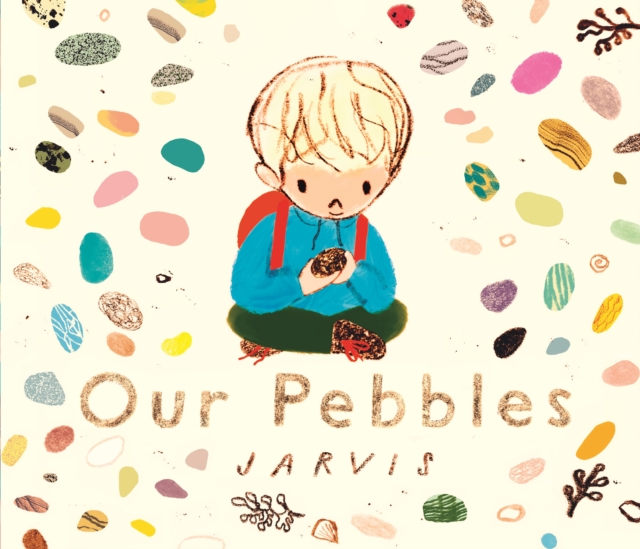
Our Pebbles by Jarvis (not that one) is a picture book about a boy scouring the beach with his grandfather. The story and the gentle illustrations illuminate those special moments spent with someone demonstrating the treasures a simple walk can offer.
May your weekend be monumental,
Lizzie
Featured in the newsletter
-

The Little I Knew
£13.99 -

We Go On
£12.00 -

rock flight
£12.99 -

Cairn
£10.99 -

Stone Lands
£25.00 -

Sun Horse, Moon Horse
£19.99 -

Our Pebbles
£12.99 -

These Are My Rocks
£7.99