A Partridge Amongst the Herons – 20 February 2026
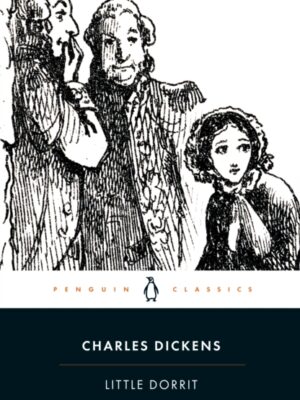
Armando Iannucci has ruined my reading plans. Twice in as many days I heard him speaking about Little Dorrit, on his programme Strong Message Here and then at an event at St George’s. I had not read it. I do not need telling three times. Sorry, piles of books downgraded from ‘opening imminently’ to ‘please await further notice’. Sorry, rickety bedside table, now supporting another tome.
My new object of settling in with Dickens under a duvet was slightly derailed when I reached the end of page 100, began the next and struggled to grasp its sense. I read the same sentence several times, feeling silly. Then I realised that the next page was numbered 105.
How much might happen in four pages? An awful lot. But not so much as to explain the fact that I appeared to have moved from Chapter IX to Chapter 30. And to have switched from following Arthur Clennam at the Marshalsea to a chap named Vronsky in Petersburg. I enjoy a good collaboration but the Tolstoy-Dickens mash-up was not one for which I was prepared.
Forced to emerge from the duvet, I hurriedly sought an edition of Little Dorrit which included the remaining 700 pages. This delayed my meeting Tite Barnacle of the Circumlocution Office and Mr Plornish of Bleeding Heart Yard but was no hindrance to my falling in love with Little Dorrit herself, which was already a sure thing.
Perhaps you have met these characters: the murderer whose moustache goes up under his nose when he laughs; Flora whose speech is so voluble that even commas desert her and whose husband, upon his death, bequeathed her an aunt ‘with a face like a staring wooden doll too cheap for expression’; the bald Maggy whose dress ‘had a strong general resemblance to seaweed, with here and there a gigantic tea-leaf;’ the Young Barnacle whose eye-glass will not stick… If you have not, I am very excited for you. If you have, please no spoilers: I am halfway through (and currently Count Vronsky-less; I presume he won’t show up again).
What might it be about Little Dorrit that appeals to Iannucci’s taste for the satirical? Well, there is a man of such extreme wealth that every politician, civil servant and businessman flocks to his parties, fawning over him, wilfully blind to any darker element of his prosperity. And then there is the Circumlocution Office, ‘… the most important Department under Government. No public business of any kind could possibly be done at any time without the acquiescence of the Circumlocution Office. Its finger was in the largest public pie, and in the smallest public tart. It was equally impossible to do the plainest right and to undo the plainest wrong without the express authority of the Circumlocution Office. If another Gunpowder Plot had been discovered half an hour before the lighting of the match, nobody would have been justified in saving the parliament until there had been half a score of boards, half a bushel of minutes, several sacks of official memoranda, and a family-vault full of ungrammatical correspondence, on the part of the Circumlocution Office…’
I shall leave you to enjoy the rest. I offer some recommendations for Armando afficionados:
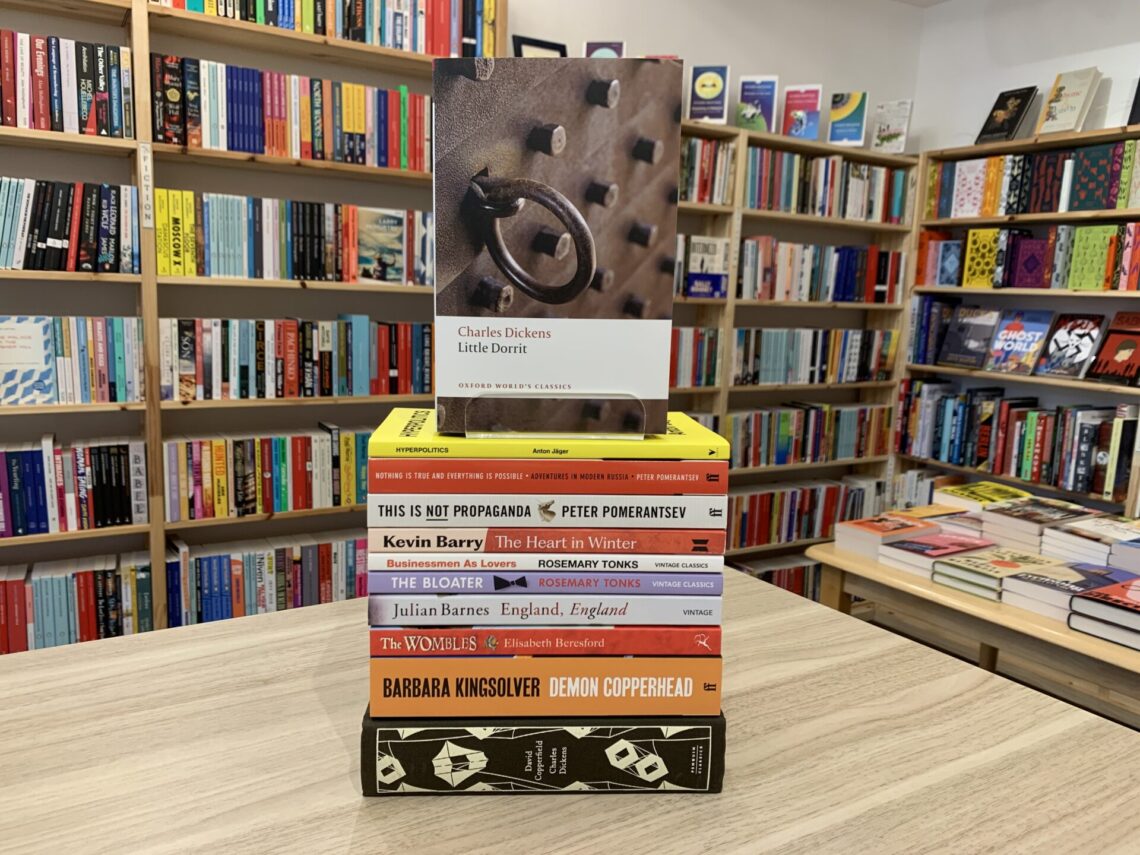
For those enjoying Strong Message Here, in which he discusses political language from the if-pology to the let-me-be-clears to the ‘tepid bath of managed decline,’ I recommend Hyperpolitics by Anton Jäger, a slim, intense book about this feverish political moment. Everything is political, protests abound, issues go viral and yet things do not change, protests subside and the next cause for outrage is only the push of a button away.
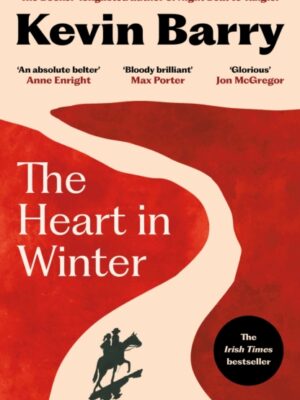
If you loved The Thick of It and Veep, a certain aspect of the dialogue in both shows is rivalled in the gorgeous western that isn’t quite a western since no one knows much about horses, The Heart in Winter by Kevin Barry. And by that aspect I do mean the swearing.
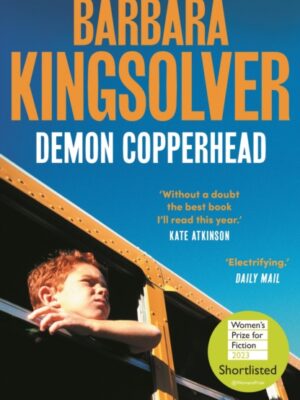
Iannucci’s film The Personal History of David Copperfield will hopefully lead you back to Dickens’ original but also to Barbara Kingsolver’s Demon Copperhead. Years on from reading her version set in the Appalachian Mountains during the opioid crisis, I can still hear Demon’s voice, powerful and heroic in the face of constant suffering.
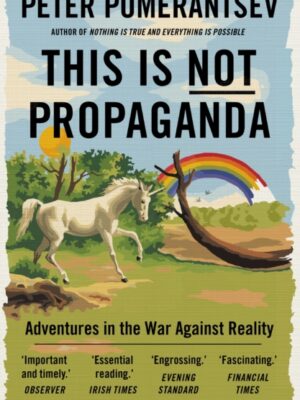
After The Death of Stalin, you must read Peter Pomerantsev’s books Nothing is True and Everything is Possible and This is Not Propaganda. The former is a delirious and terrifying account of Russia in the early 2000s when Pomerantsev was producing ‘reality’ television programmes for an increasingly controlling channel. The latter is an investigation into current (dis)information wars and the purposeful seeding of paranoia and confusion, interwoven with the story of his Soviet dissident parents and their encounters with the KGB.
On the Hour listeners and The Day Today watchers will love England, England by Julian Barnes, in which a theme park version of England is set up on the Isle of Wight. Now you can see London’s fog, Stonehenge and Manchester United without having to travel. Unfortunately Robin Hood has taken to hunting in the National Parks and the Royal Family seem permanently to misbehave…
Alan Partridge fans who quote the best lines daily and re-watch episodes until they know them by heart, I have been thinking about books which give you a similar urge and which you immediately want to share with everyone. Enter the novels of Rosemary Tonks.
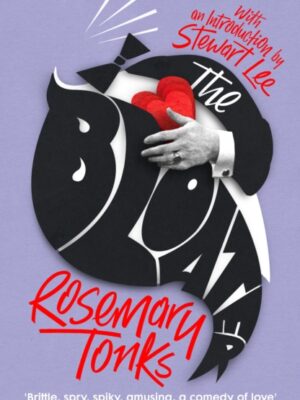
The Bloater is about a sound engineer who works for the BBC, occasionally forgets the existence of her husband and is beset by a gentleman wishing to take her to the opera, whose smell she cannot stand, whose size is too much for her sitting room and to whom she is nevertheless drawn. She is reduced to getting her neighbour to telephone pretending to be the fishmonger with an urgent delivery in order to get rid of him before she does something she may enjoy regretting. The dialogue is fantastic, the descriptions perfectly cruel, the atmosphere both glittering and hazy. Stewart Lee writes in the introduction, ‘Everyone could do with a bit of Tonks in their lives.’ I heartily agree.
Tonks’s Businessmen as Lovers is another perfect balm to our world of hyperpolitics. Mimi and Caroline are on their way to Italy by train. The former cannot wait to see Beetle with whom she is so in love it is indecent. The latter must manage her bad-tempered venture capitalist husband and the attendant journalists who wish to know what school he attended. The men in their party take against the local dentist and cut down his lemon tree. Life makes perfect sense in a world where there is none at all.
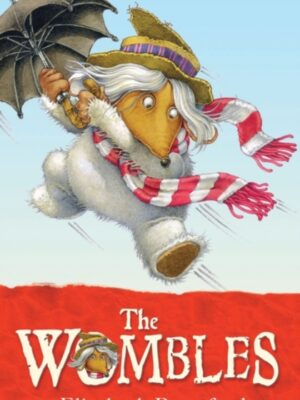
If your commitment to Iannucci includes The Armando Iannucci Shows, you’ll know why I must end by recommending The Wombles by Elisabeth Beresford. If it doesn’t, it ought to.
At the time of writing, we have a couple of spaces left for our gig tomorrow. Once a radio DJ, though his similarity to Partridge ends there, Keith Warmington will be playing in the shop along with Graham Nicholls. Do let me know if you would like to come.
May your weekend be [insert strong message here],
Lizzie
Featured in the newsletter
-

Little Dorrit
£10.99 -
Hyperpolitics
£11.99 -
The Heart in Winter
£9.99 -
David Copperfield
£25.00 -
Demon Copperhead
£9.99 -
Nothing is True and Everything is Possible
£12.99 -
This Is Not Propaganda
£12.99 -
England, England
£9.99 -
The Bloater
£9.99 -
Businessmen as Lovers
£9.99 -
The Wombles
£7.99