Brambly Hedges – 18 April 2025
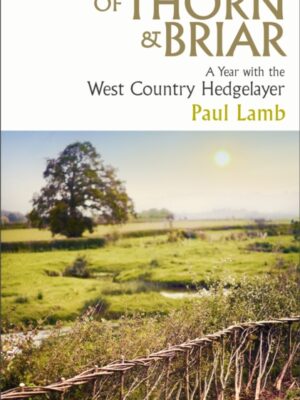
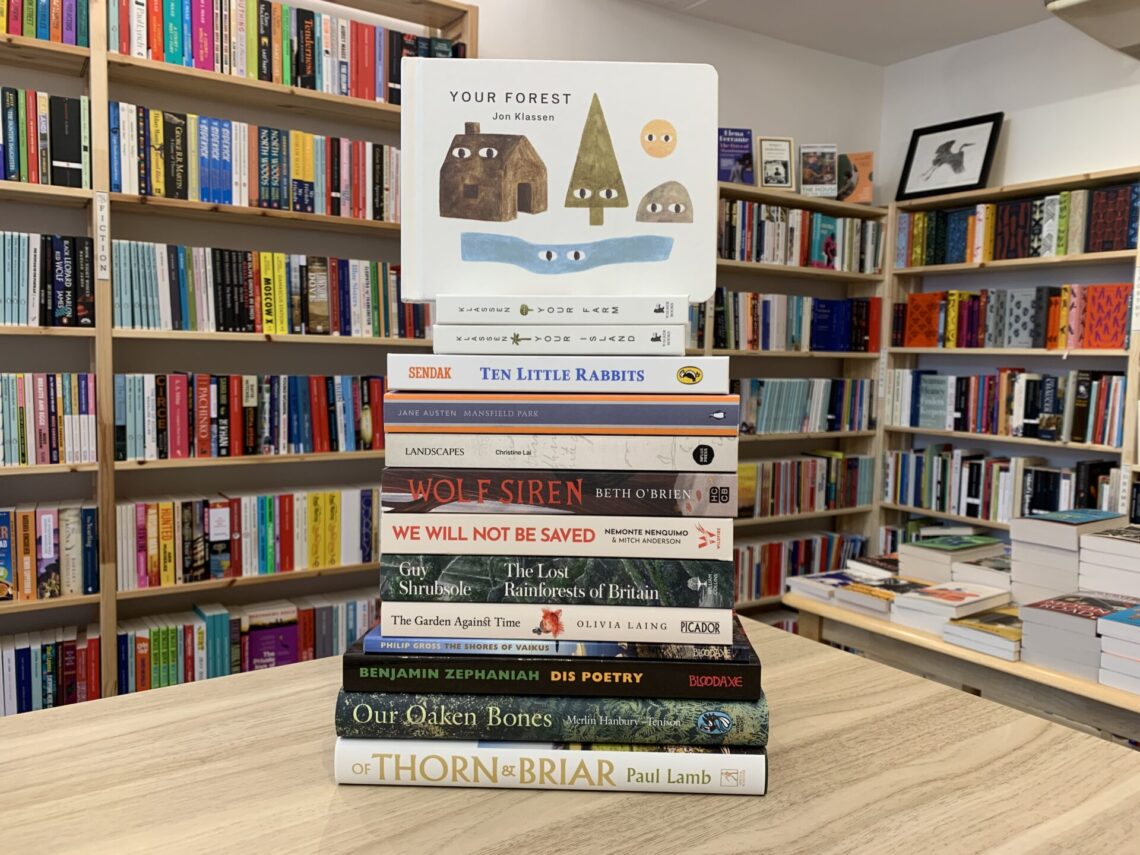
I’ve been enjoying Of Thorn & Briar: A Year with the West Country Hedgelayer by Paul Lamb. For a man named Lamb, he sure seems concerned about keeping livestock in their place. (See also: a laboured joke about him being on the lam, since he lives an itinerant lifestyle travelling between jobs in his wagon and living on site for as long as the hedge needs him.)*
His book about restoring hedgerows through traditional techniques and rejuvenating the habitats of so much wildlife is gentle and kind, though the work itself is back-breaking (not to mention cold – he requires lots of tea and hefty spoonsful of peanut butter throughout the day, followed by Taunton cider of an evening).
Of Thorn & Briar again brings up questions of borders and land enclosures, discussed brilliantly in The Garden Against Time by Olivia Laing, a favourite of mine and our next non-fiction book club choice, not to mention offering an excuse to return to Mansfield Park.
Lamb’s work is about making these borders, these ‘linear woodlands’, a place of their own, rich in diverse plant and animal life. His own way of living keeps that false border between man and nature suitably knotty: after an exhausting day, he sits in the open doorway of his wagon in the last lambent light, not prepared to move fully inside even then. The blackthorn penetrates his thick gloves, more than one spike working its way under his fingernails. Perhaps the sloe gin he makes from its fruit offers some relief.
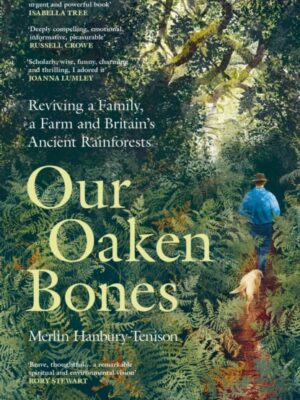
One can move from hedges to rainforests and yet remain in the West Country with Our Oaken Bones by Merlin Hanbury-Tenison. The author grew up on a farm on Bodmin Moor at the heart of which is an Atlantic temperate rainforest. Returning here after three tours of Afghanistan and with his family in turmoil, he realised the power of the forest to aid recovery.
He has since offered this to veterans and others who need help: a dirty weekend in the rainforest involves helping with its renewal, though it looks like there are some rather fine meals served between the wholesome filthiness…
He has also founded The Thousand Year Trust, a charity aiming to restore Britain’s rainforests. It will be no easy task as the name suggests, nor was it easy to convince The Charity Commission that Britain does in fact have rainforests…
While Merlin is happy to immerse himself in mud and lakes, I am happy to immerse myself in his writing. He presents research on the benefits of spending time in woodlands for physical and mental health without being didactic and his personal stories – from driving over a landmine and coming round to find himself covered not in blood but in mustard, to trying to keep reintroduced beavers within certain confines – are brilliant.
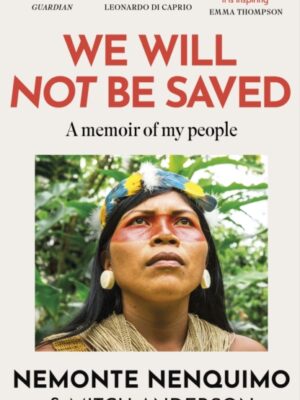
I am looking forward next to a trip to the Amazon rainforest with We Will Not Be Saved by Nemonte Nenquimo. She was born into the Waorani tribe and brought up in the forest in Ecuador. We Will Not Be Saved is a sharp account of battling the appalling treatment of indigenous people as well as fighting against the destruction of the Amazon and protecting what remains from oil companies.
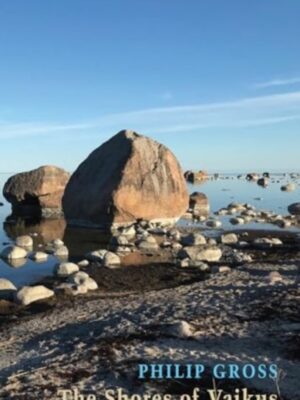
In his poem ‘The Crossing’, Philip Gross notes the ‘shimmer-smeech’ of diesel on the sea, drawing the eye to a surface that ought not be there, however glittering. On the water, he crosses time surveying islands recently risen out of the sea – ‘six thousand years is nothing’ – describing how they ‘part along the seam, quite gently, / like a dotted line between the real and the unreal, / with an instruction: tear here.’
Throughout Gross’s collection, The Shores of Vaikus, land shifts, destruction threatens the calm, edges sharpen, forests loom and Devils lurk in the clearings.
Should you go down to the woods?
With Merlin Hanbury-Tenison accompanying, yes. With Philip Gross, with trepidation. With Beth O’Brien, oh, you must. Even if your mother tells you not to.
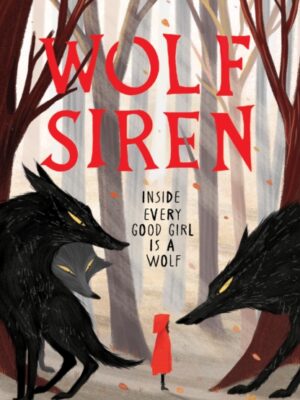
Her novel (for ages nine and upwards), Wolf Siren, is exquisite. Red has grown up in a village that is afraid of what the woods hold: a healing magic that the inhabitants are taught to mistrust and wolves which attack the men who once slaughtered them.
Red is not afraid and does not care for the constraints with which others try to bind her. Despite her poor eyesight, she is safe in the wild, guided by the trees and she is courageous when faced with a truth about her own biting history.
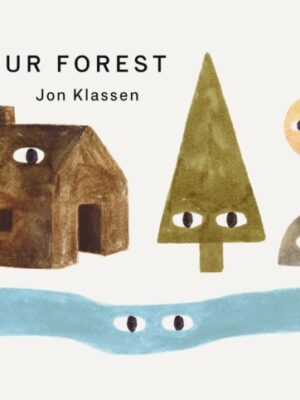
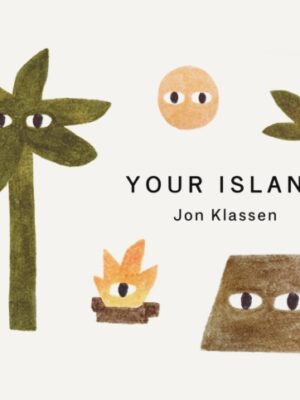
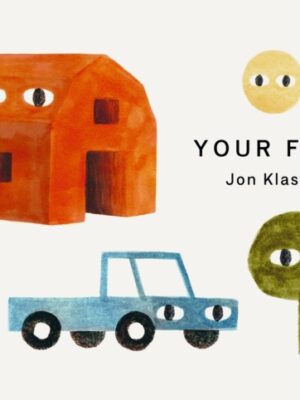
Very young readers will want to discover forests, as well as islands and farms, through the brilliant illustrations of Jon Klassen. His new board books are simply gorgeous.
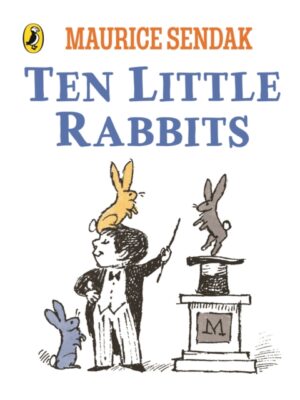
Intrepid explorers about to engage in an Easter egg hunt also need Ten Little Rabbits by Maurice Sendak. Grab a hat (or basket or bowl – I am partial to using a bonnet), pull any remaining rabbits out of it and one is ready to search for hidden chocolates. Sendak didn’t write a sequel so I have no idea what happens if anyone finds more than ten.
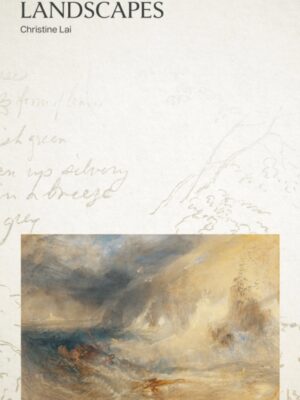
If you have sent others on a hunt in order to buy yourself reading time, I highly recommend Landscapes by Christine Lai. Penelope is an archivist living at Mornington Hall, a vast estate once home to rare books, ephemera and paintings including Turner’s A View on the Seine. The walls were decorated to bring the outside in so that one can step onto the veranda and survey the Capability Brown-designed gardens without noticing the threshold. But now environmental catastrophe is felt everywhere, in this false setting and throughout the world. The hall offers a home to those displaced by climate change though it too is crumbling.
The novel is told through Penelope’s diaries, her archive notes and her essays on Giambologna’s The Rape of the Sabine Women, Titian’s Tarquin and Lucretia and Louise Bourgeois’ Passage Dangereux, as well as by another narrator, a man on his way to invade the house and her memories…
Next week we are delighted to be supporting two events:
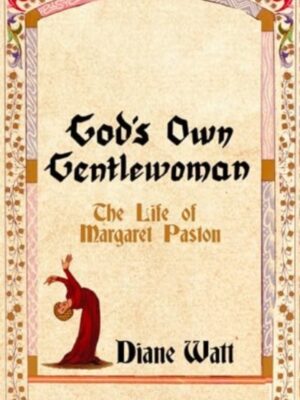
On Thursday 24th April, the University of Bristol’s Centre for Medieval Studies host Diane Watt, who will be speaking about God’s Own Gentlewoman, a biography of Margaret Paston, whose letters form the most extensive collection of personal writings by a medieval English woman.
On Sunday 27th April, Lyra Festival celebrates the life of Benjamin Zephaniah at St George’s. Dis Poetry: Selected Poems and Lyrics has just been published and the event will feature his Poem for St Pauls as well as reflections from those who knew him.
We are open as usual throughout the weekend, poised to discuss forests, boundaries, landscapes, shimmering surfaces and the dark beneath.
May the boundaries between breakfast chocolate and elevenses chocolate melt ever closer together this weekend,
Lizzie
*See also: Lamb of God, what to cook (or lambaste) on Easter weekend etc…**
** See also: must use the word ‘lambent’ more.
Featured in the newsletter
-

Of Thorn & Briar
£20.00 -
The Garden Against Time : In Search Of A Common Paradise
£10.99 -
Mansfield Park
£8.99 -
Our Oaken Bones
£22.00 -
The Lost Rainforests of Britain
£10.99 -
We Will Not Be Saved
£12.99 -
The Shores of Vaikus
£12.00 -
Wolf Siren
£8.99 -
Your Forest
£7.99 -
Your Island
£7.99 -
Your Farm
£7.99 -
Ten Little Rabbits
£7.99 -
Landscapes
£11.99 -
God’s Own Gentlewoman
£20.00 -
Dis Poetry : Selected Poems & Lyrics
£12.99