Oil, blood and… jam? – 27 March 2026
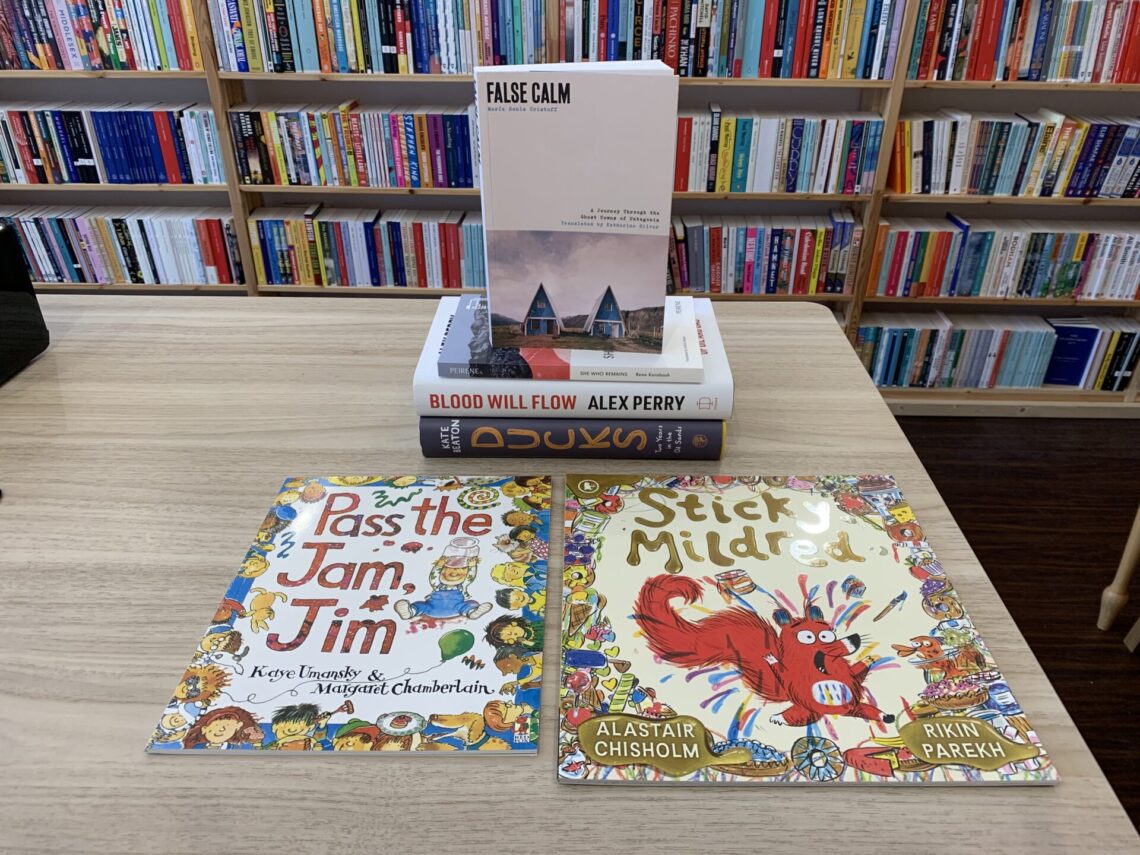
It has been a slick week in books. At Accidental Graphic Novel/Memoir Club we discussed Ducks, Kate Beaton’s depiction of two years in the Canadian oil sands. I have been reading Blood Will Flow, Alex Perry’s investigation into a vast oil and gas compound in Mozambique and the terrorist attack there in March 2021, as well as travelling to Patagonia with María Sonia Cristoff through her book, False Calm, which reports on the lives of those left behind after the oil boom in unromantic desolation. All have been fascinating, if dark. Please find antidotes below.
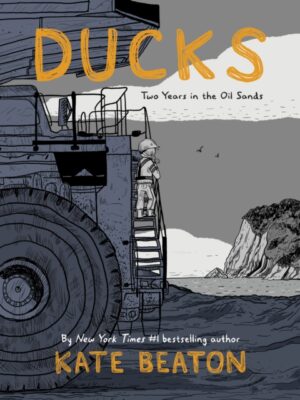
In Ducks, Kate Beaton struggles with the knowledge that she must leave her home on Cape Breton, the ‘have-not region of a have-not province,’ to find work and stand any chance of one day doing something she loves. Before she can consider what this might be, she must pay off her debilitating student loans and goes to Alberta to work in the oil sands.
Male-dominated, isolated, dangerous and gargantuan hardly begin to describe the places depicted. Men queue up to get a look at the new woman. In the camps where workers live on site, entertainment consists of drinking, taking drugs, misogyny and perhaps playing Guitar Hero. The threat of violence is constant, its fruition regular. Safety briefings do not prevent a heavy hauler driving over a truck with someone inside it. There is a strange dust on everything, breathed in by all. Hundreds of migrating ducks, like the people, are doomed.
Beaton’s art shows the camaraderie required to get by in a place like this alongside the horror of the environmental impacts and of the personal effects on her, on colleagues, on the residents of the nearest towns and on those whose homeland this once was. Above the bleak landscape dance the Northern Lights. Inside the grey buildings there are moments of humour and humanity. Outside there are ducks where we wish there had not been.
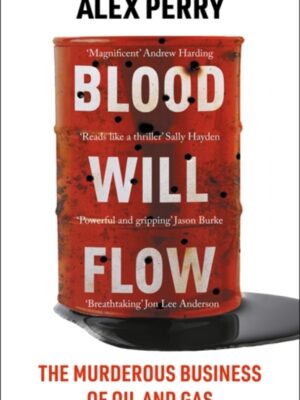
Blood Will Flow is both a wide investigation into energy companies across Europe, the US and Africa and their governments’ involvement, and a zoomed-in forensic account of a dreadful attack by al-Shabab in Palma, Mozambique, moments away from the liquid natural gas plant being built by TotalEnergies. Over one thousand people were killed. Over two hundred were kidnapped. Many more were killed or injured in the aftermath. If I read about this in the news in 2021, terribly, I don’t recall it.
Perry’s account of what led here is fascinating. The middle section of the book is a startling moment-by-moment account of what happened on Wednesday 24-Friday 26 March as the ghastly events unfolded. It is hard to read. It must have been hell to research. Perry’s refusal to allow a cover-up is admirable.
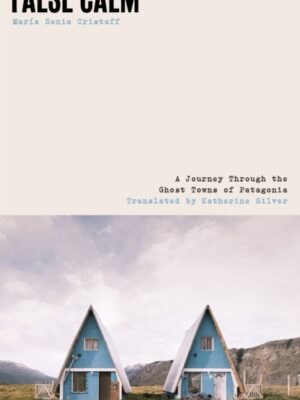
In False Calm, María Sonia Cristoff walks around towns in Patagonia, sits down, walks around some more, and finds that these forsaken places are not devoid of stories. She meets the man who came home for a week and stayed forever to run his father’s store, though no one is coming to buy anything. She meets the pilot who lost his nerve and now remains grounded, polishing model planes and ignored by his neighbours since he adopted the children of a murdered sex worker. She meets a doubting seminarian, a psychologist trying to close down institutions for the mentally unwell, a lot of stray dogs and, through a feverish dream, Bruce Chatwin, author of In Patagonia.
The result is a transportive collage, a kind of travel writing which has nothing to do with maps, negotiating terrain or an outsider coming in search of eccentricity but instead draws the reader into what feels a genuine and atmospheric representation of a place.
These are books I need to read slowly, particularly False Calm, which I think requires breaks between the disparate encounters. A very different experience from inhaling the novel She Who Remains by Rene Karabash, as I did. Set in the Albanian Alps, or the Accursed Mountains, this is the story of a woman who refuses to marry the man her father has chosen, vowing instead to be untouched and to give up her womanhood. The result is a blood feud. She must choose whether her father or brother will be killed by her intended husband. Blood feuds, sworn virgins, the laws of the Kanun governing a village… you may think this a historical novel. It is not. It’s a contemporary tale, intense, beautiful and addictive.
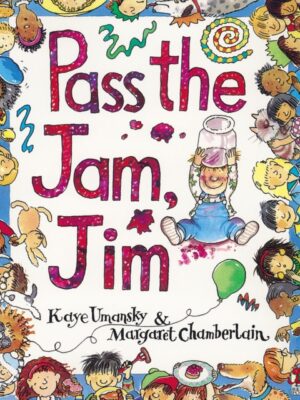
Should you need a palette cleanser from all this, please Pass the Jam, Jim. Kaye Umansky’s chaotic picture book about a children’s birthday party is a gelatinous delight. Though I am saying that as someone who does not have to attend such things and is spared the trauma of raspberry handprints adorning the walls.
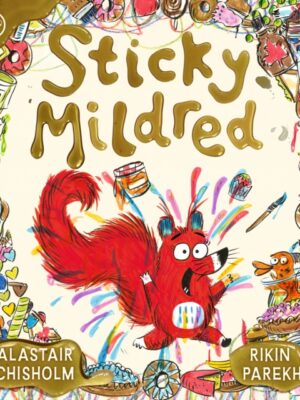
In Alastair Chisholm’s Sticky Mildred, it is time to address the fact that Mildred is sticky. Very. She loves paint and glue and toffees and marmalade and mud pies and jelly and, erm, traffic cones (not known for their adhesive qualities?). As such, a lot of things get stuck to her. At one point there’s a trombone. She is not partial to a bath. In case anyone in your life needs encouragement in that direction, do introduce them to Mildred Honeyfur.
May your weekend be jammy, your books free from,
Lizzie
Featured in the newsletter
-

Sticky Mildred
£7.99 -
Blood Will Flow
£25.00 -
False Calm
£10.99 -
Ducks: Two Years in the Oil Sands
£25.00 -
Pass The Jam, Jim
£7.99