We Are Definitely Herons, I Mean Humans – 17 July 2026
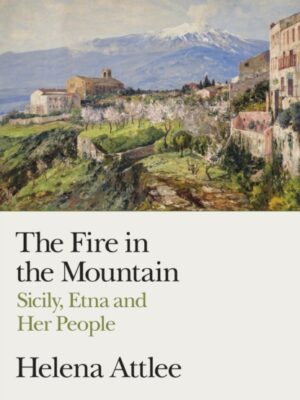
There are two kinds of people in this world: those who stand before an active volcano and think, Blimey, a volcano and those who stand before an active volcano and think, I should move here. Helena Attlee is in the latter camp. After years of visiting Sicily, she decided to settle on the slopes of Etna for a season. The volcano had been erupting almost continuously for a year. The windows of her new home are a little rattly.
The Fire in the Mountain: Sicily, Etna and Her People is an exploration of the relationship between Etna and her inhabitants. (She is female though vulcano and Mongibello, one of her nicknames, are masculine.)
La signora or mamma grande or bruttabella is a forbidding landlady. The time spent on ladders alone, daily clearing ash and lapilli from the rain gutters, would be too much for me. But then there are the pistachio orchards, the vineyards, the shepherds making fresh pecorino in the same way as their ancestors did for hundreds of years, the thin pizza dough and golden loaves from a bakery overlooking the sparkling sea and I do understand the draw.
Attlee writes beautifully, covers centuries of human history, millennia of geographical history and imbues all with a sense of the sheer noise of the anarchic landscapes of Etna. Her closing description of watching an eruption – the colours, the feel of the air, every crack in her skin lined with ash – is stunning. She climbs up the volcano into darkness, taking shelter in a lava cave with ‘the soaring architecture of a Gothic cathedral.’ What prime real estate, some might think.
Alright, more than two kinds of people and David Sedaris’ latest essay collection, The Land and its People, is the perfect way to meet many of them from the volcano-enthusiasts to the syntactically-challenged to the fashion-conscious cassock-wearers. He is, as always, brilliantly funny whether trying to engage his godson in conversation, losing his cool when yet another hotel receptionist greets him with ‘Welcome in,’ riding a horse named Tequila up a volcano in Guatemala with a couple he’d met at breakfast in Tanzania or meeting the pope.
There are also really tender moments, memories of childhood friendships and of his mother, which moved me to tears without being sentimental. Between discussions of well-endowed rams and how much to spend on a good pair of underwear, naturally.
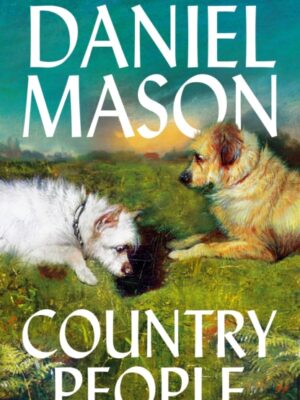
The family in Country People by Daniel Mason are uprooted from their home in California to rural Vermont. There, Kate is to take up a visiting professorship, Miles is to finish the dissertation he has been vacillating about for fourteen years, their young children Wesley and Olive are to prove themselves already their own unstoppable people and Giuseppe the dog is to test how much havoc an adored pet can wreak and still remain so.
It all seems like an ordinary set-up following a loveable family, whose assumptions about ‘country people’ can be simultaneously astute and incorrect. Except that the novel opens with a series of excerpts from texts recording the discovery of another land deep within the earth. Except that Kate is an expert on Blake and Milton. And Miles on folklore and fairytales. And Wesley plays a world-building game so complicated that he cannot explain it to his parents while Olive is a talented artist, drawing the landscape to greater effect than her Crayola pencils should permit. Oh, and Giuseppe is from a truffle-hunting breed, relentless once in pursuit of a scent.
Country People is both an insightful, warm story about ordinary families and the stories they tell one another and a wild descent, inspired by epic poems and monstrous art into, well… something mad and unfettered.
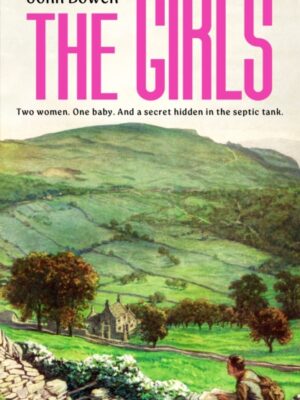
There is a similar, if darker, off-kilter feeling when reading The Girls by John Bowen. The girls are Janet and Susan and are referred to by everyone as such despite being adults. They run a haphazardly stocked village shop. It is the 1970s and a pig, which once appeared in a television adaptation of Middlemarch filmed locally, has escaped from a trailer and entered to have a look at the range of elderflower drinks and smocks.
I beg you to read this without looking at the blurb or the tagline on the front cover. It deserves to be picked up with no preconceptions. You will have a splendid time.
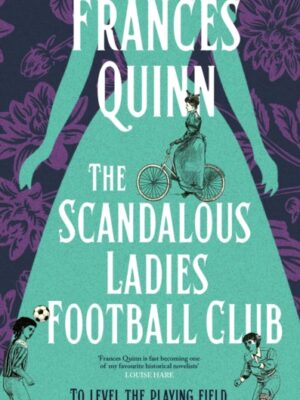
The members of The Scandalous Ladies Football Club are my kind of people. Our boys may be suffering sixty years of hurt but these women in 1897 are a match for everyone.
Minnie Newton is living in Crouch End under an assumed identity and in an outfit that really isn’t great for running around a muddy field. Nevertheless she sets up a women’s football club and draws the ire of many in daring to do so. The menfolk of Victorian London are so very outraged that thousands of them come to watch their first game… Frances Quinn’s novel is excellent fun; until Wednesday I wanted a Bellingham shirt, now I am thinking of investing in football pantaloons.
Like David Sedaris, I shudder at the idea of greeting someone with ‘Welcome in.’ But I do love to welcome people of any and every kind. Forgive me for feeling a tad doubtful though if visitors open with, ‘We are definitely human.’ In X. Fang’s latest picture book, there is something unique about the strangers who crash outside the Li’s house one night. But then we all wear hats differently. A strong contender for picture book of the year.
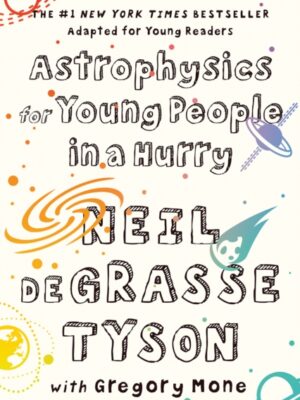
Anyone interested in where these visitors may have come from or how to communicate with them will enjoy Astrophysics for Young People in a Hurry by Neil deGrasse Tyson. This is in fact good for people of all ages, hurried or otherwise, who want to know about dark matter, dark energy what the Earth would look like to an alien and how to communicate with one…
May your weekend be full of all sorts,
Lizzie
Featured in the newsletter
-

The Scandalous Ladies Football Club
£18.99 -
The Girls
£9.99 -
The Land and its People
£20.00 -
Country People
£20.00 -
The Fire in the Mountain
£25.00 -
We Are Definitely Human
£12.99 -
Astrophysics for Young People in a Hurry
£8.99