Sense and Nonsense in the Gloaming – 1 May 2026
I am going to write about Ben Lerner, Val McDermid and lyrical ballads in the same newsletter. Try and stop me. I’m changing directions like a bat in high rafters – with rapidity, great aplomb and no little nod to the gothic, I’m sure.
Transcription by Ben Lerner is as good as my fellow bookseller kept saying (cf. newsletter previous). It is told in three parts, the first in which a man breaks his phone on the way to interview his mentor, Thomas, a recondite and charismatic academic, and thus only pretends to record the encounter which will form Thomas’s last public testament, the second in which his entertaining story about what followed, delivered to Thomas’s apostles and son after his death, is received as a betrayal, and the third in which the son, Max, gives his account of his abstruse father and his beloved daughter.
The enjoyment is in the writing which can bend light and illuminate moments and dialogue almost as exquisitely as the glass sculptures the narrator describes seeing which have affected his life and writing ever since. The intrigue is in the filial roles of the narrator and Max and their struggles now that they too are fathers. Those ideas are timeless and next to them the characters’ total reliance on their phones and iPads could be jarring, even infuriating. Instead, it is central to a book about how to live and relate to one another across generations and history.
Having said that, since last week I continue to re-read Austen and the perils of book addiction over technology addiction do provide more ready amusement. I don’t remember chuckling so much when I first read Northanger Abbey. Perhaps I was around Catherine Morland’s age, even more naïve and had not learnt to take things less seriously.This time round, I was laughing in delight.
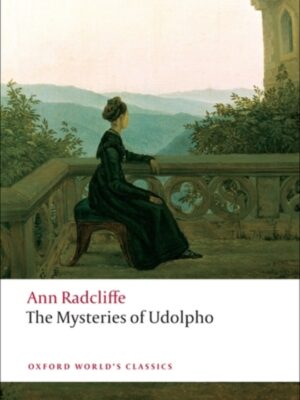
Ought I now to read all the ‘Horrid Mysteries’ which the dreadful Isabella encourages her new friend to? Should I read The Mysteries of Udolpho, the gothic novel at the heart of Austen’s satire? It is 736 pages… New book club idea: we spread it over the course of a year, reading it late at night in various appropriate settings, flying buttresses, locked cabinets and black veils required? Meet you under the pointed arches after dark… No phone torches, only candles.
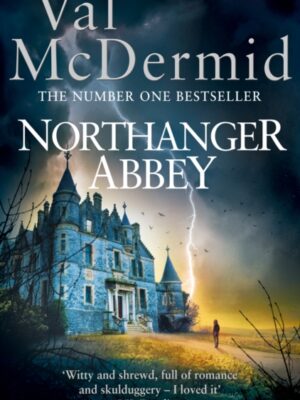
Reading plans have been derailed again by the friend who told me about Val McDermid’s Northanger Abbey. I can’t read that now, straight after the real thing, I thought. And then… oh, it’s really quite fun. Instead of Bath, we are at the Edinburgh Festival. Dancing is of the Scottish kind. Cat and Bella are obsessed with a series of recent vampire novels. I’m not saying it’s a masterpiece but perhaps after considering Plato and Kafka and quantum mechanics with Ben Lerner, a palette cleanser of not inconsiderable silliness is warranted.
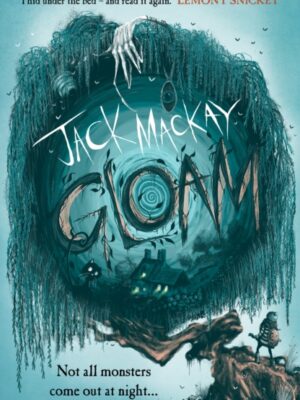
Young adult readers and those of Catherine Morland’s sensibilities should absolutely indulge in Gloam by Jack Mackay in which Gwen and her siblings move to a house on Gloam Island, which is daily cut off from all else by the tide and where you don’t need to wait for it to get dark to feel things lurking in the shadows… (I’m a wimp and have coped so far but then I have had Miss Austen to help me laugh at my more fanciful moments.)
I went back also to Sense and Sensibility, the Austen I have read the most and about which I change my mind the most. I can’t quite learn gratitude for Mrs Jennings, I vacillate over forgiving Willoughby and sometimes I fall for, sometimes resent falling for Colonel Brandon. Only Edward is constant: he remains an indolent idiot.
How I love these two sisters, Elinor and Marianne (sorry, Margaret, I know you’re there too but until you are out in society I have no idea what to make of you and your few lines do not suggest great presence of mind), though I would have been furious growing up in a household burdened with Elinor’s upstanding principles and I can’t quite share Marianne’s passion for dead leaves…
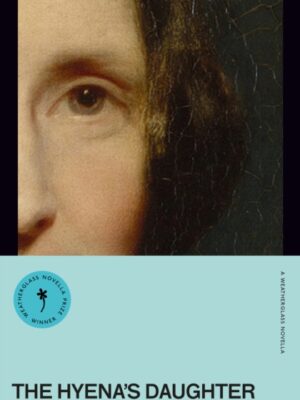
I will return to them again and find them quite different within the same pages as I age and they do not. Meanwhile I have met three sisters with a poet addiction (and less of a poetry addiction) and a poet with a sister addiction. The Hyena’s Daughter by Jupiter Jones is about Fanny Imlay, Mary Shelley and Claire Clairmont. It is very good indeed.
The focus is on Fanny, the first of the sisters pursued by Percy Shelley, then left behind by him and her half- and step-sisters. It is written in short sections, in third and second person, sometimes narrative, sometimes comprising a scrapbook of definitions, letters and short dramas. There is philosophy, science and an animating force, there is vindication and there is a young woman entombed by and strengthened by her mother’s whalebone stays.
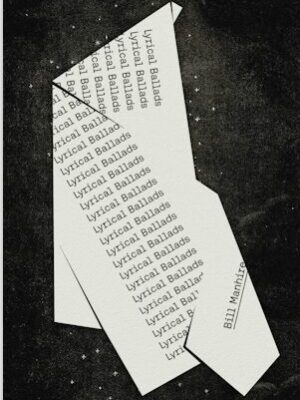
While the sisters do discuss Coleridge, it is to the Lyrical Ballads of Bill Manhire that I have since turned, simply the best poetry collection I have read for many months.
If you ever feel shut out by poetry, here is the most inviting remedy. You will travel across landscapes, peer around corners, meet a clown on a bicycle in a cemetery and a grandmother protesting at her depiction in a poem, all to the music of rain and insects and Manhire’s perfectly chosen words.
Stepping outside lands enclosed and away from romantic countrysides, on Tuesday we are going back in time with Eloise Kane, author of Wilderlands. Her new book investigates when Britain can truly be said to have been wild and whether anything of that remains. Do join us at 6pm on 5 May for a 12,000-year history of the country and a reckoning with our role in its ecology in future. Let me know if you would like to come and solve this with Eloise and a glass of something over the course of an hour or so.
May your weekend be lyrical, but beware wild poets,
Lizzie
Featured in the newsletter
-

Transcription
£14.99 -
Gloam
£7.99 -
Val McDermid’s Northanger Abbey
£10.99 -
Northanger Abbey
£8.99 -
Sense and Sensibility
£18.99 -
The Hyena’s Daughter
£10.99 -
Lyrical Ballads
£12.99 -
Wilderlands
£20.00 -
The Mysteries of Udolpho
£10.99