Boundless Books – 5 December 2025
Recently I have been asked for recommendations for a book to read whilst on the treadmill (who is doing this?), a book for someone who doesn’t like to think (should my suggestion perpetuate or change this?) and something for someone who is ‘really into poison’ (there is a wealth of literature out there but perhaps we should address ‘really into’ first, Agatha Christie notwithstanding).
To the person wanting a suggestion for their partner, when I asked what they were like, I meant ‘what are they interested in?’ but it was lovely to hear about their striking cheekbones.
I hope that we rise to each occasion and give apt recommendations. But, please, someone ask me for a book on Tennyson’s early years. Because boy am I ready.
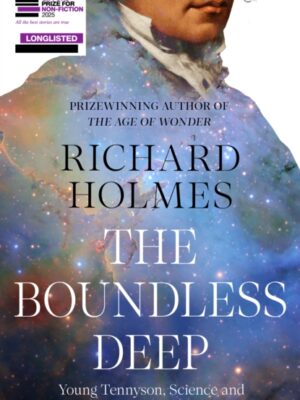
I have been reading The Boundless Deep: Young Tennyson, Science and the Crisis of Belief by Richard Holmes. Tennyson is now for me not some stern or melancholic bearded figure. He’s a rather handsome smoker, reading all he can about the latest scientific discoveries, struggling with a group of friends to grasp what these mean for a nation’s religious beliefs and for the centrality once placed on humans. He is a man mesmerised by what he could see through a telescope and a microscope, bewitched by the Kraken and ‘widowed’ by the death of Arthur Hallam. He is a great dancer, a witty mimic, and strong enough to lift a donkey, a skill once needed at a family picnic.
In Footsteps, Richard Holmes writes about biography itself, through accounts of his research into Robert Louis Stevenson, Mary Wollstonecraft, Percy Bysshe Shelley and Gérard de Nerval. His is no armchair approach – he follows literally in his subjects’ footsteps, acting the detective and, through his travels, becoming something of a medium. When Hilary Mantel was researching Thomas Cromwell for the Wolf Hall trilogy, she spoke about being so steeped in his life that she signed letters in his hand. Holmes may not embody Tennyson but the reader certainly feels Holmes’s subject walking alongside him.
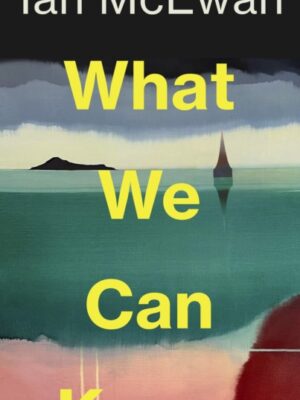
Footsteps has become a guide and inspiration to many, including the fictional researcher in Ian McEwan’s novel, What We Can Know. It is 2119 and Thomas Metcalfe is obsessed by the poet Francis Blundy, or more particularly by a poem he wrote for and performed on his wife’s birthday in 2014. The poem was never published and seems lost.
Moved by an image of Richard Holmes tracking Robert Louis Stevenson on his journey through southern France and becoming increasingly convinced that he would meet Stevenson himself on a bridge over the River Allier, even removing his hat in expectation, McEwan’s character too feels that he can reach into the past and meet its inhabitants. He is fascinated by the poet, obsessed by the idea of the poem and in love with the woman for whom it was written. What can he really know about these people, their friends, their lives, their thoughts as they fall asleep? The archives offer much while the missing poem is ripe for speculation but what of the correspondence, diaries and stories at whose absence he can only guess?
I had to tear myself away from What We Can Know to attend what proved an equally absorbing event with Ian Hembrow about his biography of Anders Celsius, astronomer, Earth scientist and inventor of the centigrade scale.
Ian spoke of a moment in his research when examining Celsius’s diagrams mapping the shape of the earth at the poles where Celsius’s compass had pierced the page. On seeing this he felt a squeeze of the hand from across the centuries. He quoted from Richard Holmes’ Footsteps. There was something in the air. Hand squeezes all round.
What We Can Know is excellent: fantastic plot; flawed, sometimes horrible characters; a soaring, gorgeous question about what we owe to art, to history and to future generations. Good bit of Shakesperean vengeance as well. Two playful notes at the end lead me to wonder about the task McEwan’s biographer will face, what jokes the author may have buried in his writing or his garden.
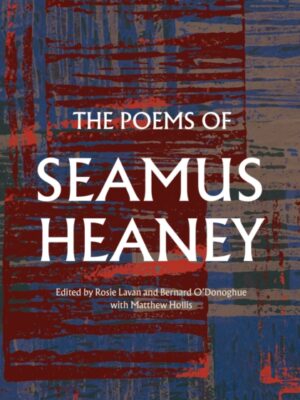
The fictional poet of McEwan’s novel repeatedly compares himself with Seamus Heaney, though even at his most hubristic he knows he cannot match him. Faber have recently published a full collection of Heaney’s poems. It’s a stunner. A definitive edition with previously unpublished work too. And if you can guess how much it weighs, I’ll give you a chocolate button. Which you’ll need because of the exhaustion from trying to lift it.
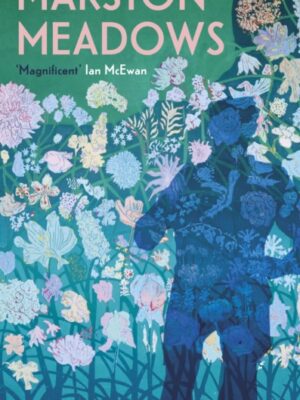
The complex corona, the lost poem at the heart of McEwan’s novel, is inspired by the title poem of Marston Meadows by John Fuller. It comprises fifteen sonnets, the last of which must be formed of the first lines of each of the previous sonnets, in order and no cheating by altering grammar or syntax. Marston’s is a high wire act (in damp and lusty meadows) of utter brilliance.
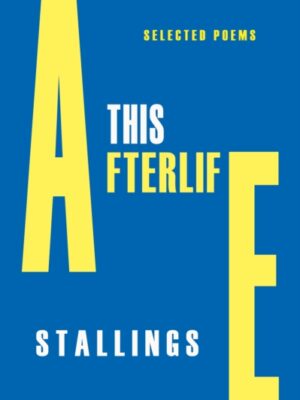
For Fuller and for Blundy, their coronas are a gift. (Though I should prefer to receive the former’s rather than his fictional counterpart’s – you’ll see why…) I gave myself the gift of poetry this week and settled down with This Afterlife by A.E. Stallings, stirred by Holmes’ discussion of Tennyson’s lyric and Stallings’ approach to form.
This is a selected poems from her four collections and a ‘lagniappe’ of other poems and translations. Many of them explore classical mythology and her adoration of Greece. Her poem, ‘After Reading the Biography Savage Beauty’ on Edna St. Vincent Millay is genius.
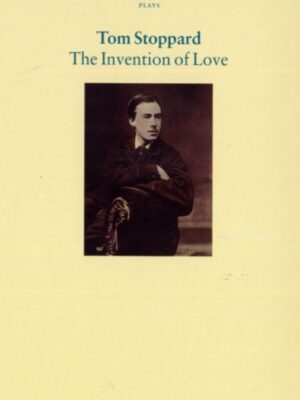
The best gift this Christmas would be if her individual collections were published in full in the UK. In Tom Stoppard’s The Invention of Love, A.E. Housman says that he, ‘would join Sisyphus in Hades and gladly push my boulder up the slope if only, each time it rolled back down, I were given a line of Aeschylus.’ Perhaps I won’t need to go that far to read more of Stallings’ work. But it’s a worthy sentiment.
Of course, one of the greatest imagined, fictional biographies ever written is the play The Invention of Love. It means a great deal to me. Should you also be in mourning for its author, do stop by. We may sense a squeeze of the hand in these Bristol streets down which Sir Tom once walked. Or, more likely, the scent of a cigarette and the glint of a bright smile.
May your weekend be full of strong poets, able to lift a donkey and stir the Kraken,
Lizzie
Featured in the newsletter
-

The Boundless Deep
£25.00 -
Footsteps
£10.99 -
What We Can Know
£22.00 -
Celsius : A Life and Death by Degrees
£25.00 -
The Poems of Seamus Heaney
£45.00 -
Marston Meadows
£12.99 -
This Afterlife
£15.99 -
The Invention of Love
£10.99